


Biography and History
BY John D'Emilio ON February 11, 2015
 Bear with me as I think while I type:
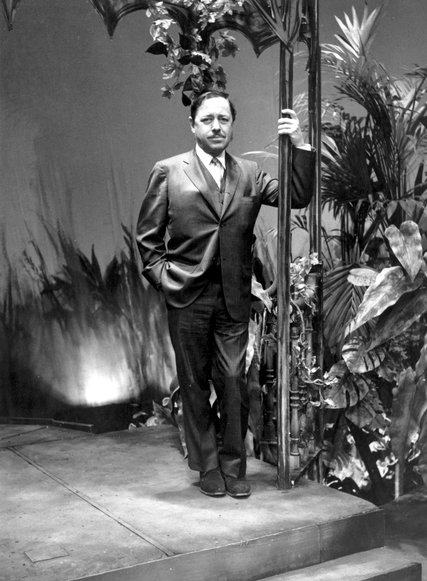
Last weekend, I was paging through an old unread pile of The New York Review of Books. A review of John Lahr’s recent biography of Tennessee Williams caught my attention. At one point, the reviewer quoted at length from a diary entry in 1941 where Williams was questioning the self-hatred of a gay friend of his who had said “We ought to be exterminated for the good of society.” In response, Williams wrote: “How many of us feel that way, I wonder? Bear this intolerable burden of guilt? To feel some humiliation and a great deal of sorrow at times is inevitable. But feeling guilty is foolish. I am a deeper and warmer and kinder man for my deviation. More conscious of need in others, and what power I have to express the human heart must be in large part due to this circumstance.”
Even though I have written a biography, I am not a great fan of the genre. Almost every full-length biography tells me much more than I ever want or need to know about an individual. And, given whose records are likely to exist and be preserved, biography as a genre too easily plays into “great white man” approaches to the understanding of history. No, I prefer the study of collective movements and community life, both of which are much more likely to provide a sense of the lives of everyday people and how they made a mark on their worlds.
But then I think about my undergraduate students over the years. When I lectured on the broad social and economic forces that gave rise, say, to urban reform efforts in the early 20th century or the black freedom movement of the mid-twentieth century, they might be able to resurrect a bit or a piece of it for an exam essay. But, if I organized my lecture on Progressive reform around the life and work of Jane Addams, or the history of the black freedom movement around the life and work of Bayard Rustin, they seemed to retain every last detail. A life was something most of them could intimately relate to and a life story became the doorway through which they began to understand historical change.
A few years ago, when I signed on to work on Outhistory and its redesign, I invited a group of sharp undergrads to produce material for the site. We settled on a “birthday biographies” project – researching the lives of LGBT people in the past and producing short profiles that became the basis for the “Happy Birthday” feature on the home page. I included some “high profile” names, such as Jane Addams and James Baldwin and Oscar Wilde, but most of the names, not surprisingly, were thoroughly unfamiliar to contemporary undergraduates – people like Perry Watkins, Marijane Meaker, Alberta Hunter, and Bill Strayhorn. In thirty years of teaching, this proved to be one of the most rewarding experiences I had. The level of excitement that discovering and learning about these lives generated among them was extraordinary. It led me to a second project with two students who did more extensive profiles that came together in the “Big Lives” exhibit, and it persuaded another faculty member, Cat Jacquet, to have students in a Transgender History course produce a series of biographies that are also now on the site.
All of which is to say: while I’m not about to write another biography, and while I will probably not become a reader of full-length biographies, I don’t want to underestimate the power and value of biography as a way to generate interest in the study of the past.
And, I come back to the Williams diary of 1941. This was before Williams had become a literary celebrity. He was just turning thirty, the product of an economically struggling white middle class family. His words provide a piece of evidence of how, even during an era of intense oppression, a gay man could generate a counter-narrative of what it means to be gay, one that emphasized self-respect. I think back to my research on Bayard Rustin. The life experience of this African American man from a hard-working family in the early 20th century also produced a self-image that did not accept the homophobia of American society. Maybe, I find myself thinking, the biographies of those-who-became-famous-but-didn’t-start-out-that-way could be sources of evidence to reconstruct the history of broader LGBT communities, the consciousness of earlier generations, and much more.
Comments