


Grappling With Carson McCullers: 100 Years
BY Sarah Schulman ON July 20, 2017
This essay, and the short fiction with which it ends, was presented at the Carson McCullers Centenary in Rome on July 16, 2017.
It was a green and crazy summer.
Carson McCullers is one of those singular artists who inspires us over time, and yet is impossible to imitate. Much of the worst of American literature has been created by multi-generations of inadequate Hemingway impersonators. But no one tries to imitate McCullers. One of the many things about her that I try to understand is why, unlike Elvis, she is impossible to imitate and how at the same time she is able to influence us.
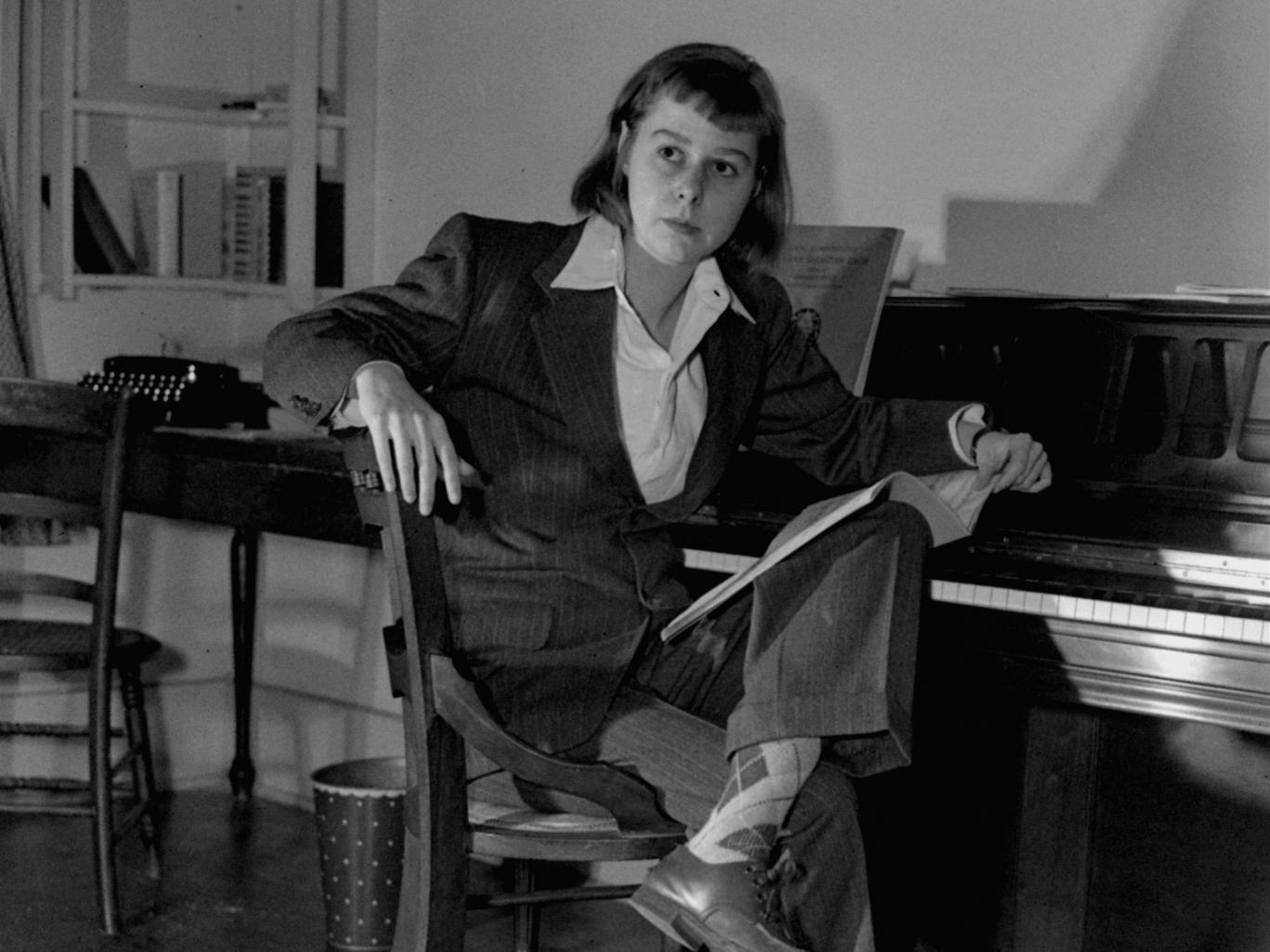
“Carson had a male identity, and if she lived today I believe she would be on the continuum of what we call `trans.’”
Lets start with the opening words of Member of The Wedding: It was a green and crazy summer… On a superficial reading it might remind us of “It was a dark and stormy night” but actually the phrase works in very unusual ways. Dark and Stormy are both on the same plain. We are separate from the night: looking out at it from inside a shelter, or we are surrounded on the deck of a ship, but dark and stormy are evoking the same state of experience. On the other hand green and crazy are two entirely different spheres of perception, because green is a visual and crazy is interior: a state of mind, an evaluation as well as a feeling. So, Carson manages, within the frame of seven simple, almost minimalist, words, to evoke multi-dimensions of interiority and exteriority: emotion and perception. In this way, she is a master of the American thought sentence. And that is why we cannot imitate her.
So, how is it that she influences us?
I was re-reading the beautiful anthology that Carlos Dews edited for the Library of America, and went back to her short story “Court In The West Eighties” – written in 1935 at the age of 18, when she left her Columbus, Georgia home to study writing at Columbia University. This was her second pilgrimage to New York Earlier she had come to Julliard to study classical piano, but something happened and she ended up giving all her money to a prostitute and had to return. This time, more familiar with the ways of the City, she looks out her apartment window at the neighbors on the other side of the courtyard, who she will never meet or know. Particularly, interesting is one man, with red hair, who has a drink at the window after work. She, the narrator, is reading Karl Marx, and that enhances her understanding of the people with whom she shares this quiet knowledge.
“I felt that this man across from me understood the cellist and everyone else in the court as well. I had a feeling that nothing would surprise him and that he understood more than most people.”
I had a feeling says this young woman for whom thoughts, ideas, and insights would always be feelings.
Most of the story involves descriptions of her feelings about her neighbors until suddenly, a very surprising thing occurs. The narrator tells us, her readers, that she thought about sharing this information by letter with a friend back home but that the description would be “too hard” to write. Wait a minute! Didn’t she already write it to us? Isn’t that what we have been reading, her description? And then it sinks in. She does not consider us to be readers, she does not consider us to be separate human beings, suddenly it becomes clear that the reader is in fact part of her, and is living inside her mind. That the page is actually her feeling, and we are in her consciousness, and the story becomes more intimate than even a whisper on a pillow.
This is what influences us: McCullers’ vulnerability, the total openness, the invitation to know all that she has to know. This is what makes us inspired.
It certainly worked for me.
In 1999 I had a workshop of a new play called “The Child” (that later became a novel) and I mentioned to the young lead actress, Angelina Phillips,
“You know, you look like Carson McCullers.”
And she said: “Who’s that?”
Gay Gotham | Museum of the City of New York | 10.7.2016
BY Claire Potter ON September 20, 2016
 Gay Gotham: Art and Underground Culture in New York is opening at The Museum of the City of New York on October 7. Stephen Vider and Donald Albrecht, co-curators of the exhibit, also have a book of the same name available for pre-order on Amazon.
The exhibit and book explore the lives, works, and networks of ten LGBT artists across the 20th century — Harlem Renaissance writer Richard Bruce Nugent; lesbian poet and playwright Mercedes de Acosta; ballet impresario Lincoln Kirstein; photographer George Platt Lynes; composer Leonard Bernstein; artist Andy Warhol; photographer Robert Mapplethorpe; lesbian feminist artist Harmony Hammond; transgender artist Greer Lankton; and dancer/choreographer Bill T. Jones. It also examines the broader cultural world around them, with additional original works, including photographs by Carl Van Vechten; Charles Henri Ford’s copy of The Young and Evil, with drawings by Pavel Tchelitchew; one of Beauford Delaney’s portraits of James Baldwin; Larry Rivers’s portrait of Frank O’Hara; photographs of WOW Cafe performers by Eva Weiss; Chantal Regnault’s photographs of Octavia St. Laurent, Willi Ninja, and others from the house ballroom scene; as well as video, music, and poetry read by Carmelita Tropicana, Moe Angelos, and Rodney Evans.
You can read a little more about the exhibit in the New York Times. Tickets are available for the opening event, a discussion on the past and future of LGBTQ New York featuring Sarah Schulman, Jack Waters, Peter Cramer, and Harmony Hammond, and moderated by Slate editor Bryan Lowder, at 6 pm October 6.
New and Noteworthy
BY Claire Potter ON June 1, 2015
 NYU Press has released its fall catalogue, which includes new work from Georgiann Davis, Gloria González-López, and Joshua Gamson.
- The list of Organization of American Historians Distinguished lecturers for next year includes OutHistory.org’s co-director Claire Bond Potter, of The New School. Lecturers donate their fee to the OAH to keep the good work of this organization going. Go here for a complete list of speakers.
- Put it on your calendar: “TransCuba,” a photo exhibit by Mariette Pathy Allen, author of “TransCuba,” “The Gender Frontier,” and “Crossdressers and Those Who Love Them” will be shown at the Main Gallery of the Rayko Photo Center, 428 Third Street, SF, CA 94107, June 25th thru July 31st, 2015, 10 am – 8 pm, free admission. For more events associated with San Francisco Pride, go here.
- The St. Louis LGBT History Project announces that it has just received a generous donation of PFLAG memorabilia, clippings, photographs and stories from Audrey Miles.
- The Indianapolis LGBT Film Festival, November 13-15 2015, has just issued a call for entries.
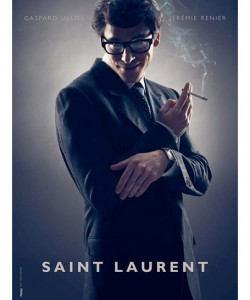
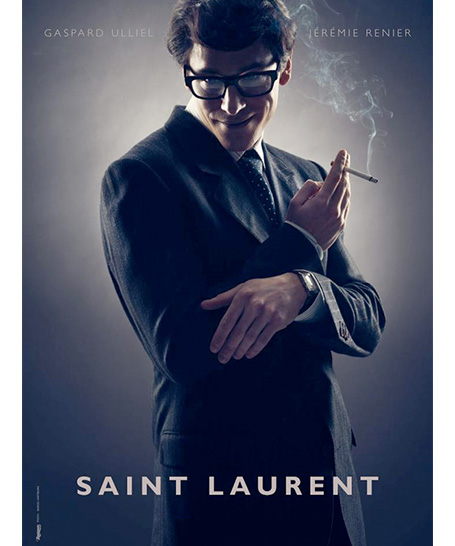
- Bertrand Bonello’s 2014 biopic Saint Laurent is now in limited release in the United States from Sony Classics. Go here for cities and showtimes.
New and Noteworthy
BY Claire Potter ON March 27, 2015
- Sandy Soto reflects on the most recent edition of Cherríe Moraga and Gloria Anzaldúa This Bridge Called My Back: Writings By Radical Women of Color, first published by Persphone Press in 1981 and just issued in its fourth edition by SUNY Press; Bully Bloggers (March 22, 2015)
- Michael Musto, “Dating a Closet Case: How Do You Handle That?” OUT Magazine (March 23, 2015)
- A Buried Past, Forgotten Stories: The Sexual Underground of the Meatpacking District before Gentrification. Retrospective of Efrain John Gonzalez’ photography of the trans, gay and bisexual cultures from the 1970’s until the turn of the century. On view April 2nd – May 31st at the Bureau of General Services – Queer Division.
Not Rod McKuen
BY John D'Emilio ON March 4, 2015
 Last week, I was spending time working my way through my notes from the interviews I did back in the 1970s with pre-Stonewall “homophile” activists. I’ve been imagining that, at some point, I will put them all on Outhistory so that the material will be available to future researchers wanting to explore that topic. Almost everyone I interviewed at that time has since passed away, so there are no opportunities to explore their experiences directly today.
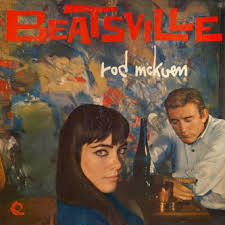
While reading through the notes of my interview with Gerard Brissette, who in the early 1950s was responsible for bringing Mattachine discussion groups to the San Francisco Bay Area, I noticed this: “Rod McKuen went to May 1953 convention.” It caught my attention, I think, because I had read just a few weeks earlier obituaries of McKuen, and did not remember any mention of his being gay, and certainly nothing about gay activism of any sort. I went on-line to read the New York Times obituary, and sure enough, nothing gay turned up [An excellent commentary on the silences in the accounts of McKuen’s life was posted by Gillian Frank on Notches.
I had absolutely no memory of Brissette mentioning McKuen when I interviewed him at his home in El Cerrito, California in November 1976. It was a detail that did not contribute to the narrative of what happened at the Mattachine meetings in 1953, so it never made its way into the account I wrote in Sexual Politics, Sexual Communities. As a result, for the last 40 years, this little tidbit has been lying untouched and unnoticed, of use to no one.
I interviewed my subjects with a purpose in mind: to reconstruct a history of pre-Stonewall activism. What mattered to me most in those interviews was to get enough background biographical information from my subjects in order to be able to situate and contextualize their move to activism, and then their recollections of the people, the organizations, the activities, and the events associated with this young, fledgling movement. But, not surprisingly, random bits and pieces of the past are scattered through my notes from these oral histories. Some mention bars they went to in the city where they first came out; others say something about the social networks that existed; still others might recall a news story or a police action. Someone else might throw in a reference to . . . Rod McKuen.
The experience confirmed for me that I do need to move forward with the project of putting all these interview notes online so that they can be accessible to others. Yes, they will be of special interest to those wanting to know about the history of queer activism in the 1950s and 1960s. But, given that LGBT history is not exactly “over-documented,” I hope that some of the details scattered through these reminiscences are able to find their way into histories of other topics that are still to be written.
News and Announcements
BY Claire Potter ON January 11, 2015
Slut: A Play: February 7 & 8, at The New School, New York City. Written by Katie Cappiello, directed by Katie Cappiello & Meg McInerney, and featuring The Arts Effect All-Girl Theater Company
StopSlut is a youth-led movement to end slut shaming and transform rape culture. This February, a part of StopSlut, The Arts Effect, the Feminist Press, and The New School present TWO SPECIAL PERFORMANCES OF SLUT: A Play at Tishman Auditorium at The New School.
This critically-acclaimed play follows the journey of 16-year-old Joanna Grace Del Marco, who is raped by three of her friends during a night out in NYC. Through Joey’s story and those of girls’ in her community, audiences witness the damaging impact of slut culture and the importance of being heard. This play was developed by The Arts Effect in collaboration with high school students during two years of weekly creative sessions.
Each performance will be followed by a talkback with the cast, directors, and special guests.
LGBT History: Dramatically Expanding
BY James Waller ON November 25, 2014

Arch Brown, who established a foundation in honor of his partner Bruce. to fund queer history through theater
When my friend Arch Brown established the Arch and Bruce Brown Foundation some 20 years ago, I was delighted to be asked to serve on the organization’s board, but I’ve got to admit I was a little concerned about its mission. I thought that by focusing on literary and performing arts work “based on, or inspired by” LGBT history, Arch might be drawing too tight a boundary around the kinds of things the foundation could fund. It wasn’t that I wasn’t interested in queer history—I shared that enthusiasm with Arch and his then recently deceased partner, Bruce Brown, to whose memory the foundation was dedicated. I was just afraid that the literary competition and play production grant program Arch envisioned wouldn’t draw enough submissions, because of that “historical” restriction.
Our early literary competitions—back then, we alternated yearly between plays, novels, and short stories—drew 20 or 30 or 40-some entries, and, frankly, I kept expecting this stream to run dry. I just couldn’t imagine that there were all that many fiction writers and playwrights “out there” who were (1) writing about LGBT people and (2) basing their work on historical sources. What a failure of imagination on my part. Over two decades, the stream has turned into a torrent. The foundation’s 2014 playwriting competition (our annual contest is now restricted to plays) drew a whopping 254 entries. Now, granted, some of the plays submitted were ineligible for consideration because they made only glancing reference to history (if any reference at all)—but there were relatively few of those. This flood of competition submissions—combined with all the grant proposals we’re getting that seek support for new performing-arts works based on LGBT history—convinces me that a formidable, and growing, number of LGBT artists are looking to history for inspiration.
And to judge from our competition and grant-program submissions, the parameters of LGBT history also seem to be expanding dramatically (pun intended). Sure, we still receive plays (and requests to fund plays) about notable historical personages. Michelangelo is a perennial favorite, unsurprisingly, and this has been a bumper year for works about Alan Turing. Nothing wrong with that, and, in fact, some of these works are quite good: Among the runners-up in our 2014 play contest was Michelangelo and Tommaso, by Sacramento-based writer James Rosenfield, which centers on the young Roman nobleman with whom the artist was reportedly infatuated. And a highly inventive, intellectually dense theatrical work about Alan Turing, called Pure and written by Queens, New York–based writer A. Rey Pamatmat, won one of our honorable mention awards this year. (We’ve also recently helped fund a new opera based on Turing’s life being produced by the American Lyric Theater, as well as a documentary film about controversy over the posthumous royal pardon Queen Elizabeth granted Turing a year ago.)
But alongside works like these come entries set in unexpected locales with casts of characters very unlike those we used to see. This year’s competition winner, The Dangerous House of Pretty Mbane, by another Queens-based writer, Jen Silverman, is set largely in South Africa against the backdrop of the 2010 World Cup; its characters, with one exception, are black South Africans. Centering on a young woman’s search for her vanished former lover, a lesbian activist fighting the heinous practice of “corrective rape,” the play is rooted squarely in recent South African history. About its genesis, Silverman told me, “My inspiration was an actual petition circulated by a woman named Ndumie Funda, of the activist organization Luleke Sizwe. The petition called for corrective rape to be recognized as a hate crime, [and] I was captivated by the idea of someone putting herself in the national eye, putting herself at such risk at home.” An emotionally devastating, morally complex work that even dares explore the all-too-human motivations of one hate-crime accomplice, Dangerous House will have its premiere production at Philadelphia’s InterAct Theatre in January.
Nearly contemporaneous but worlds away from Dangerous House are the setting and characters of one of this year’s second-prize winners (two plays tied for second place this year). That play, Average American, by Manhattan-based writer Susan Miller, is a behind-the-scenes, often comic look at the development of the first-ever American TV program about lesbian women. A fictional account based loosely on the making of the pilot for Showtime’s The L Word, on which Miller worked, Average American serves up a very different but undeniably important slice of LGBT history. As Miller told me, “People are hungry to see themselves. Shining a mainstream light on the lives of gay people, women especially, marked a turning point in the public exploration of LGBT identity and representation. We made history.”
Our other second prize went to the play Mr. and Mister, by Robert Matson, who lives in Edmond, Oklahoma, and who, with his partner, has run a gay community theater in Oklahoma City for the past 15 years. Its setting is more formulaically “historical”: the action takes place on the Great Plains during the post–Civil War years. But it, too, breaks new ground in the exploration of the LGBT past by powerfully depicting the intersection of multiple histories of oppression in the United States—of gay people, African Americans, Native Americans, and those who seek love or employment outside a socially accepted norm.
So I’m very happy to report that I was very wrong, 20 years ago, to be worried about our little foundation’s mission. The bounds of LGBT history are just as wide, its complexities just as deep, as those of human history itself—and the possible uses of that history are, for creative artists, apparently inexhaustible.
James Waller is a writer and editor and a regular blogger and contributor to mediander.com. Since 2012, he has served as president of the Arch and Bruce Brown Foundation.
News and Announcements
BY Claire Potter ON November 23, 2014
- Remember gay bookstores? There are very few of them left, collateral damage from the general demise of independent book selling. However, New York has added one: The Bureau for General Services – Queer Division, owned by zine publishers Tom Jackson and Abi Benitez has just opened at the LGBT Community Center on West 13th street, off Seventh Avenue.
- Radical History Review Queers the Archives. This issue came out in February 2014, but since we didn’t have a blog then at OutHistory, we couldn’t post it. Enjoy.
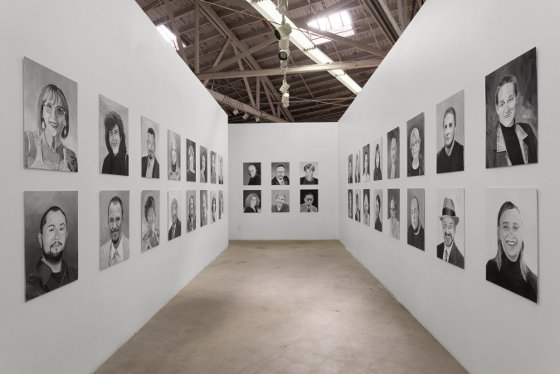
Transtextuality (Senate Bill 48)
- Transtextuality (Senate Bill 48). This collection of black and white oil portraits by artist Katie Herzog consists of 48 portraits of transpeople in the arts and letters. It debuted at Night Gallery in 2013, and has recently been acquired by the Los Angeles County Museum of Art. “Senate Bill 48” refers to the California FAIR Act, passed in 2011, that mandates the inclusion of LGBT in high school curricula. The bill also mandates the inclusion of information about people with disabilities and the disability rights movement, and adds sexual orientation and religion to the list of categories about which schools may not present discriminatory views. (This post was updated on 11/26 to eliminate an error and expand on the bill’s reach: HT/Emily Hobson.)
News and Announcements
BY Claire Potter ON November 21, 2014
-
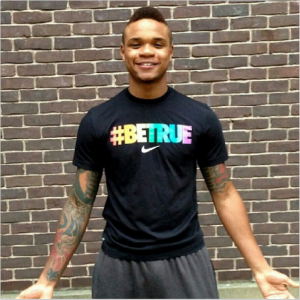
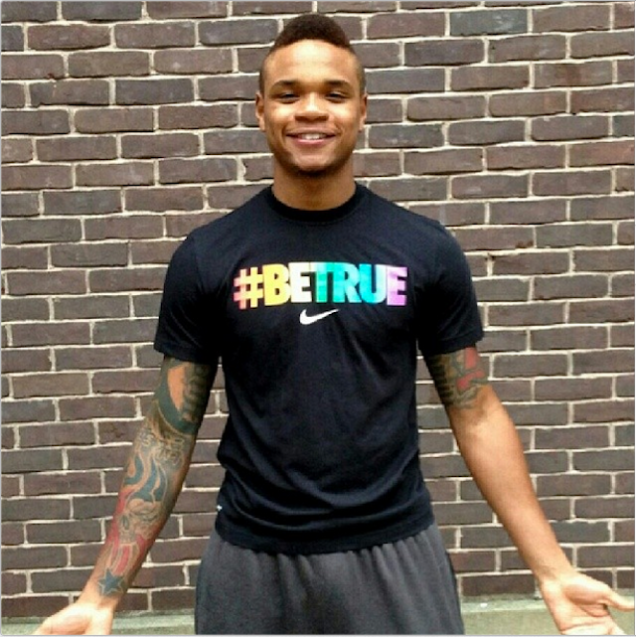
Making History at UMass: the adorable Derrick Gordon becomes the first publicly queer player to start a men’s DI basketball game.
This week, Derrick Gordon, of the University of Massachusetts, the only men’s DI college basketball player to come out as gay, made history by starting his first game since the announcement on April 9. Note to campuses trying to recruit athletes: the talented Gordon, like many other queer prospective college students, chose UMass because he knew he would be comfortable coming out there. “I definitely did my research,” he said. “I know it’s gay-friendly on campus. I’d see gay flags from time to time, or gay couples holding hands. So I know it was a great place for me to come out.”
- Also in Happy Valley, on Friday November 21, Edmond Chang, Assistant Professor of English at Drew University, is giving a talk at Smith College, Northampton, MA: “Unloving Mechanics: Queerness + Straightwashing in Digital Games.” For the full details, go to the 5 College Digital Humanities page.
- A powerful essay by Yale’s professor of women, gender and sexuality studies Inderpal Grewalabout explains why racial and gender diversity on the faculty is related to how women, people of color and queers are treated on campus. Check out the section of the comments thread where someone (presumably a Yalie but maybe not) claims WGSS is not getting adequate resources from the university because the courses are easy A’s, providing more evidence for what Grewal has argued.
- “Classical Nudes and the Making of Queer History,” a show curated by art historian Jonathan David Katz is up at the Leslie + Lohman Museum of Gay and Lesbian Art in New York from now until January 4, 2015. “These nudes are in every sense of the term iconic; they are the building blocks of our Western visual culture,” Katz argues.
- There’s nothing like a history bar with an S/M theme: The town of Lviv, Ukraine, sports ” a popular spot for dates and group outings” called The Masoch Cafe, honoring the 19th century’s proudest perv (and Lviv native) Leopold von Sacher-Masoch. You can order a caning, a little bondage or some hot wax torture with your drink. “Female customers are far less squeamish than their male counterparts, Sasha Bankovich, a waitress at the cafe said, cradling a whip in her hands. ‘We’ve noticed that men scream a lot,’ she said, adding that requests from customers for a whipping had remained constant throughout Ukraine’s months of [political] tumult. ‘In this respect, things are very stable in our country.'”
Some items in this post have appeared yesterday at Tenured Radical.