


What We’re Reading | Post-Turkey Edition
BY Claire Potter ON December 4, 2015
 Deron Dalton, “How 4 Black Lives Matter Activists Center Queer and Trans Issues,” The Daily Dot, Ocober 11 2015.
- Domenick Scudera, “The Professor is a Drag Queen,” Chronicle of Higher Education November 29 2015.
- Jaye Cee Whitehead, Kath Bassett, Leia Franchini, and Michael Iacolucci, “`The Proof is in the Pudding:’ How Mental Health Practitioners View the Power of `Sex Hormones’ in the Process of Transition,” Feminist Studies vol. 41 no. 3 (Winter 2015), 623-650.
- Ileana Jiménez, “Revising Queer Immigrant Dreams,” Curve, October 23 2015.
- Timothy Peltason, “Oscar in Earnest,” Raritan vol. 35 no. 1 (Summer 2015), 114-156.
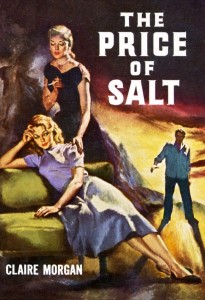
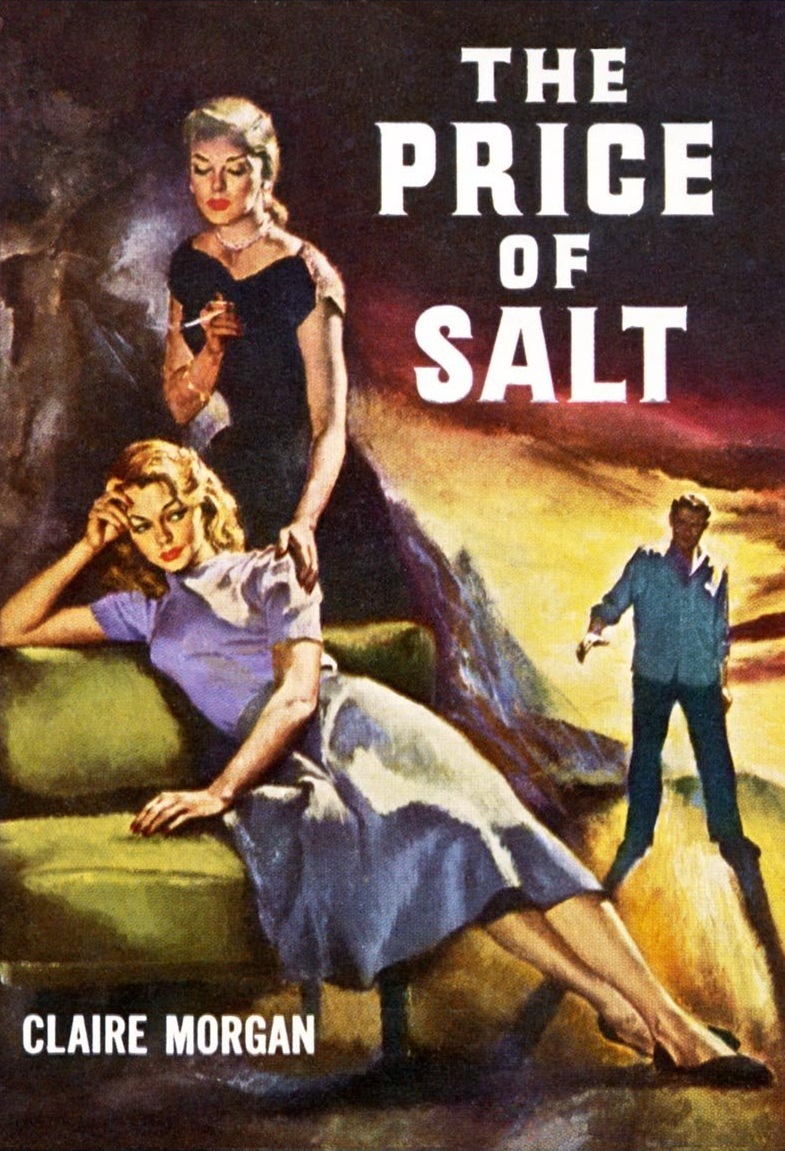
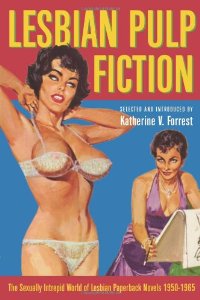
- Frank Rich, “Loving Carol,” Vulture, November 18 2015. You also might want to read the original novel by lesbian author Patricia Highsmith, first published in paperback under the pseudonym Claire Morgan.
- Stephanie Hallett, “Killjoy’s Kastle: Where Lesbian Feminist Tropes Go to Die,” Ms. Magazine, October 30 2015.
Reel in the Closet: the NYC Premiere
BY Chris Howard-Woods ON November 18, 2015
 This weekend director Stu Maddux is rolling out the red carpet at IFC in Greenwich village. The NYC Premiere of Reel in the Closet, a documentary starring ordinary LGBT people, is opening the door to a “treasure trove of rare home movies made by gay people – some dating to the 1930s – that have long languished in the back of people’s closets.” Featuring archivists by the likes of the Library of Congress, the Royal Copenhagen Library, and the GLBT Historical society (to name a few), the documentary brings to light how the LGBT community lived before the civil rights movement, during the Stonewall Riots, and after Harvey Milk’s assassination. The premiere of Reel in the Closet is part of DOC NYC, and will take place Sat. November 14 at 2:15pm at the IFC Center.
You can purchase tickets for this event here.
First Documentary on Gays in America Now Publicly Available
BY Claire Potter ON June 23, 2015
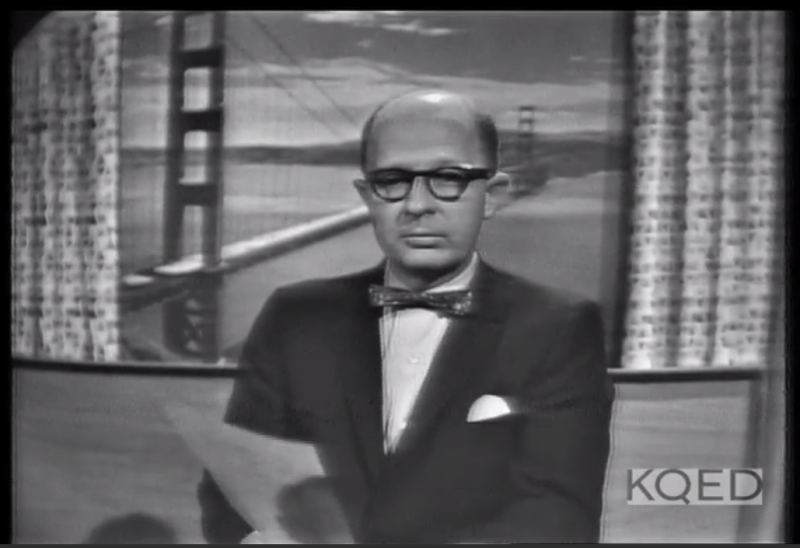
KQED station manager James Day, 1961, warning viewers that they are about to see a film about homosexuals.
The Rejected, broadcast in 1961 and believed to be the first documentary on gay life in the United States, is now publicly available. Produced by KQED San Francisco, it had scenes shot inside a gay bar, allowing many in the broader public who may have believed they had never met a gay man or lesbian to gain a glimpse of queer society in action. As importantly, although aspects of the films perspective will strike modern viewers as homophobic, in the film queer people spoke as experts about themselves, an opportunity for which homophile organizations like the Daughters of Bilitis, the Mattachine Society, and ONE Institute had campaigned for nearly a decade.
The film was presumed to have been lost: in fact, much early television has been destroyed because the tapes — often seen as more valuable than their content — were frequently reused by budget-conscious directors to record new shows. But a team of scholars and archivists from the Bay Area Television Archive at San Francisco State University finally found a copy at the Library of Congress. You can read the full story of their quest here and you can watch the restored version of The Rejected here.
New and Noteworthy
BY Claire Potter ON June 1, 2015
 NYU Press has released its fall catalogue, which includes new work from Georgiann Davis, Gloria González-López, and Joshua Gamson.
- The list of Organization of American Historians Distinguished lecturers for next year includes OutHistory.org’s co-director Claire Bond Potter, of The New School. Lecturers donate their fee to the OAH to keep the good work of this organization going. Go here for a complete list of speakers.
- Put it on your calendar: “TransCuba,” a photo exhibit by Mariette Pathy Allen, author of “TransCuba,” “The Gender Frontier,” and “Crossdressers and Those Who Love Them” will be shown at the Main Gallery of the Rayko Photo Center, 428 Third Street, SF, CA 94107, June 25th thru July 31st, 2015, 10 am – 8 pm, free admission. For more events associated with San Francisco Pride, go here.
- The St. Louis LGBT History Project announces that it has just received a generous donation of PFLAG memorabilia, clippings, photographs and stories from Audrey Miles.
- The Indianapolis LGBT Film Festival, November 13-15 2015, has just issued a call for entries.
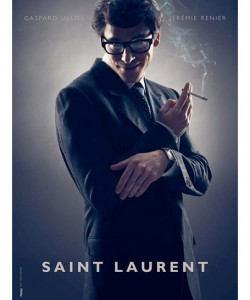
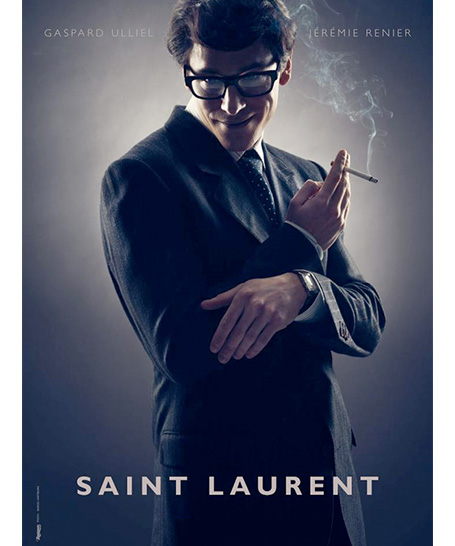
- Bertrand Bonello’s 2014 biopic Saint Laurent is now in limited release in the United States from Sony Classics. Go here for cities and showtimes.
D.W. Griffith’s Interracial Same-Sex Kiss
BY Lauren Kientz Anderson ON April 7, 2015

In “Broken Blossoms,” a 1919 Griffith film, an interracial heterosexual kiss is so fraught it cannot occur.
If there’s one thing I’ve learned studying history it is that the world is always more complicated than widely accepted narratives allow. The corollary to that is that social progress is not as smooth as popular culture would have our undergraduates believe. That was brought home to me recently when I started reading Donald Bogle’s history of African Americans in film. My copy of the 2001 edition had not arrived yet, so I read the first chapter in the 1994 edition and good thing I did, as there was an astounding paragraph about a moment of interracial same-sex intimacy in a D.W. Griffith film that had been cut from the subsequent edition.
If you know anything about US History, African American History, and/or film history, the name D.W. Griffith raises a very straightforward debate about racism in popular culture. Griffith was the filmmaker who directed Birth of a Nation, released in 1915, a film that is associated with the revitalization of the Ku Klux Klan in the 1920s. Rarely can we document a piece of culture’s direct impact, and yet this film led directly to a new KKK, one that dominated local governments around the country and terrorized people of color, Jews, and Catholics. The film was powerful in part because its feature-length cinematic portrayal of the “Dunning School” of Reconstruction History was so much more dramatically and technically sophisticated than previous films. I often show the chaotic scene in the South Carolina capitol to my history students, pausing on the slide that claims that this image is an exact reproduction of a photograph from that era of state governance, even including a citation to indicate its historical veracity. Talk about the way films shape our understanding of the past!
You can imagine my surprise, then, to come across this section in the 1994 third edition of Donald Bogle’s Toms, Coons, Mulattoes, Mammies, & Bucks (Continuum), about another Griffith film released just three years after Birth of a Nation. This one, The Greatest Thing in Life (1918), was about The Great War in the very midst of that conflict. It was, Bogle writes,
a film so removed from the mainstream that it was hard to believe it was directed by one so much a part of the mainstream as D.W. Griffith. It represented a curious departure from the sentiments expressed in The Birth of a Nation. Released in 1918, its theme, says Lillian Gish [the actress who portrayed pure white womanhood in Birth of a Nation], was its director’s favorite—‘The brotherhood of man.’ In the climactic scene, a white racist Southern officer finds himself sharing a shell hole with a black private. At first there is great hostility. But war makes strange bedfellows—and evidently compatible ones. For when the white officer is hit by an enemy shell, the black soldier rescues him. In doing so, he saves the life of the officer but is critically wounded himself. Dying, he calls for his mother, requesting a last kiss. The injured officer grants that request. He pretends to be the black man’s mother and kisses the soldier—on the lips. According to Miss Gish, ‘It was a dramatic and touching scene, during which audiences sat tense and quiet.’
The film was a financial failure and is now a lost film, as I discovered when I attempted to locate a clip of the above scene.
I’ve not read any D.W. Griffith scholarship, so I don’t know if film scholars and historians have explored this major change in oeuvre, though given Griffith’s monumental place in American film history I can’t imagine it’s been ignored. I wonder whether these scholars believe it was penance for the way Birth of a Nation was received or if they (somehow) believe it represented one part of a consistent philosophy.
And of course, this passage not only caught my eye because of the stark change in racial and gender dynamics in the three years between Birth of a Nation and The Greatest Thing in Life. (Perhaps it is not as stark a change as it might first seem, since it is an individual moment of racial reconciliation, which is always easier for white Americans to stomach than a wholesale transformation of a racist political system that Birth of a Nation both captured and strengthened.) I was also transfixed by the scene of two men kissing, on the lips, produced by a Hollywood director whose very name is a synonym for intolerance.
If that is not a complicated moment in history I don’t know what is.
Screening History
BY John D'Emilio ON February 25, 2015
 I can’t help watching the Oscars and not find myself reflecting afterward on how important a role films have played in my classroom over the years. Occasionally, I have used mainstream Hollywood movies to illuminate the culture of the era we were studying. One semester, for instance, I organized my 1960s course as if it had a once-a-week “lab” session: on Thursday afternoons, we assembled to watch a ‘60s movie. The Manchurian Candidate captured the paranoia that the Cold War and McCarthyism engendered. Guess Who’s Coming to Dinner exposed how retrograde Hollywood was in presenting race. Its idea of a film that promoted racial justice, at a time when mass protests covered the country and Black Power had become the leading edge of racial politics, was a domestic story about a white family. The Graduate gave a view of the “generation gap” that was so much a part of the cultural atmosphere.
Most of the time, however, I have incorporated documentary films to illustrate vividly the times we were reading about – films, in other words, that made a claim to being history. For post-World War II history, I will forever be grateful to the makers of the two series, Eyes on the Prize and Vietnam: A Television History. They drove students back to the pages of history books, which can be drier at times than I would like them to be, to learn more about the episodes the films depicted.
Documentary films have been especially valuable to me in teaching LGBT topics. Until fairly recently, popular culture has not done much to portray queer lives, and so these documentaries allow students to see people and settings and hear discussions that otherwise were not widely accessible. The Times of Harvey Milk reliably provoked spasms of shock and outrage – shock at the events they saw on the screen and outrage that they hadn’t known about these events before. Common Threads made the AIDS epidemic more immediate than it had ever been and provoked its share of outrage as well. And It’s Elementary has often worked as a history about my students’ lives. The film, about how to integrate LGBT issues into classrooms, was released in 1996, and college students today can still identify closely with the stories it presents since it very much describes issues relevant to their own experience of schooling.
Last year saw the release of two movies that were not documentaries but that gave dramatic on-screen life to two important pieces of history. Selma, set in 1965, showed the courage it took for African Americans to fight for the right to vote in the South and the resistance of the system to demands for racial justice. The Imitation Game was a “biopic” about the life of Alan Turing, whose role in deciphering Nazi code during World War II may have been decisive in the Allied victory and whose gayness made him the target of the harshest oppression after the war.
Both films generated a lot of discussion about their portrayal of history, mostly in the form of criticism of the inaccuracies and distortions. For instance, critics of Selma found fault with the way President Lyndon Baines Johnson was presented – as someone trying to obstruct the campaigns of civil rights protesters rather than as a strong supporter of voting rights himself. I thought these criticisms were groundless. LBJ did oppose the demonstrations early on, and the film does show his turnaround later in the story.
The criticisms of The Imitation Game have been more far-ranging. The filmmakers have been accused of distorting almost every aspect of Turing’s life. They have variously questioned the presentation of his personality as snarky and curmudgeonly; challenged whether he was as obsessed with an early boyhood friend as the film suggests; taken issue with major aspects of how the breaking of the Nazi code was pictured and the working relationships among the group of characters; and objected to the depiction of Turing’s death as a suicide. Unlike with Selma, where I know the history well, I’m not in a position to pass judgment on any of these issues. But the criticism has come from so many writers (including from my cherished co-director, Claire Potter, in a blog post on this site) that I assume that, in fact, The Imitation Game is bad history.
So, let me get to my “shocking for a historian” conclusion: I find myself not caring whether the criticisms are accurate or not, or whether The Imitation Game is “good history” or “bad history.”
What makes me say such a thing, I wonder and you might ask. Well, when I went to see the movie with a friend last fall, we both sat there utterly mesmerized by the story that was unfolding and the passion and drama of it. The whole audience (probably 200 or so people, most of whom to my eyes were not gay) seemed to be having the same response. The film gripped them. I try to imagine why. Most, I suspect, had never heard of Alan Turing. And now they were coming away with the sense that 1) this man played a crucial role in the winning of World War II; and 2) horrible things happened to him for no reason other than that he was a gay man.
Roughly 10 million people in the U.S. have seen this movie. I am SO pleased that most of them will have taken those two historical lessons home with them from the theater. The Imitation Game isn’t a documentary. Its purpose is to dramatize a story successfully so that it wins over an audience. It did that. And, while there may have been lots to question in the way of historical accuracy, I simply can’t take issue with the two big lessons that are at the heart of the movie. See it if you haven’t already.
Movie About Alan Turing Turns Out to Be Big Fake!
BY Claire Potter ON February 5, 2015
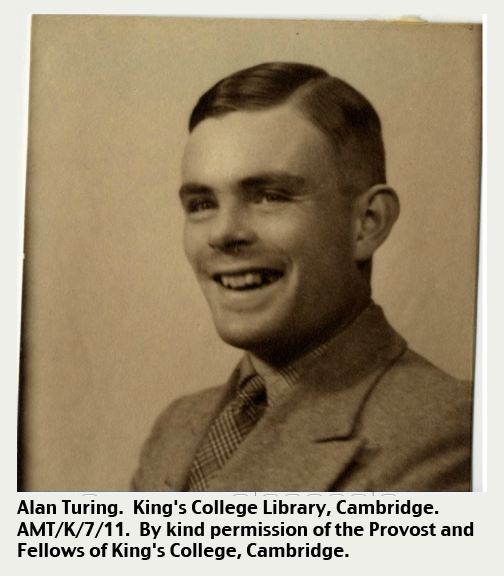 Since this review essay is behind the firewall at the New York Review of Books, most of you won’t get to read it, but Christian Caryl’s critique of the historical (in)accuracies in Morton Tyldum’s Alan Turing biopic, The Imitation Game (2014) deserves mention. I do recall, after having wept my way through the end of the movie, asking my partner whether we had every seen a major motion picture about a gay man that did not end tragically, and we couldn’t think of one.
Turing, a brilliant mathematician, cryptographer and digital pioneer, was persecuted under British law for his homosexuality, and did endure several years of chemical castration. Citing the relevant scholarship, however, Caryl argues that it is unlikely that Turing killed himself, or that he was reduced to a pathetic trembling shambles, as the end of The Imitation Game suggests. (Indeed, as any of us who has ever taken estrogen would know, that is definitely not one of its effects.) Turing may have killed himself entirely by mistake, as part of an experiment, left no suicide note, and was not perceived by any of his friends as suicidal at the time. In fact, he had just embarked on a new series of investigations he was quite excited about.
While Turing was “decidedly eccentric, and he did not suffer fools gladly,” the early hostility between Turing and the rest of the team is a fiction, as is his portrayal as a “tortured” genius who fought alone and unappreciated for the project that ultimately may have won the war for the allies. Furthermore, Turing’s team had begun to break the German Enigma codes long before the “A-HA!” moment in the film, using an earlier version of the machine dubbed “Christopher,” supposedly named after Turing’s secret boarding school love. In nearly all respects, the story of the war as it was fought at Bletchley Park is, Caryl writes, also “a bizarre departure from the historical record.” The film “does its best to ladle in extra doses of intrigue where none existed,” including Turing’s discovery of a Soviet spy, who then threatens to reveal Turing’s homosexuality if Turing reveals his own treachery.
As for the story about Turing’s agonized, hidden and largely unrequited sexuality? Caryl’s reading of the two extant biographies is that:
there is no basis for any of this in the historical record; it’s monstrous hogwash, a conceit entirely cooked up by Moore. The real Turing certainly paid periodic and dignified respects to the memory of his first love, Christopher Morcom, but I doubt very much that he ever confused his computers with people. In perhaps the most bitter irony of all, the filmmakers have managed to transform the real Turing, vivacious and forceful, into just the sort of mythological gay man, whiney and weak, that homophobes love too hate.
The film, Caryl writes, “is desperate to put Turing in the role of a gay liberation totem but can’t bring itself to show him kissing another man — something he did frequently, and with gusto.”
Reading this review caused me to re-think the very public controversy over historical inaccuracies in the movie Selma (Ava DuVernay, 2014), and particularly its portrayal of Lyndon Johnson (nobody seems to have worried very much about its portrayal of James Farmer, which was also quite partial, to say the least.) Two things stand out: the first is that filmmakers are far more interested in a great story than in history, and that in the name of art they rearrange facts for maximum effect. This has always been true, and to that extent I would argue that Ava DuVernay came in for special criticism that a white, male director obviously does not. The second, however, is that film is an important vehicle for conveying historical, cultural and political narratives, and historians need to be much more active in pointing out these flaws and demanding that filmmakers address them. When it comes to queer history, this is doubly important: our field has advanced swiftly in less than three decades, and we shouldn’t stand by while culture producers continue to inform the general public that we are inherently tragic figures.
“The Birdcage” Made Me Gay
BY Eric Gonzaba ON January 26, 2015
 John D’Emilio’s recent post on James Baldwin and the writer’s impact on gay youth in the early sixties got me thinking about what cultural products “made me gay.” It didn’t take me long to realize that the cultural item that changed my whole way of seeing the world was a film, not a book. Today, when friends ask me my favorite movie, I unashamedly answer The Birdcage.
Ok, stay with me here. I don’t mean to suggest that I think the Mike Nichols’ 1996 comedy is, artistically, the greatest film ever made. It certainly looks like an odd choice when compared to a brilliant work such as Baldwin’s Another Country.
For reasons I can’t fully explain, my parents were not much into censoring my and my brother’s media habits. They freely dragged us along to the movie theater to watch films that I only later realized were off limits to my school friends. I’d like to think my parents wanted their kids to be more cultured; realistically, they probably just wanted to see the latest blockbuster movie and munch on buttery popcorn (by far their favorite snack) I was just six years old when I first saw The Birdcage, a movie absurdly rated “R” (for more on the craziness of the MPAA’s homophobic rating system, see This Film is Not Yet Rated).
From the opening, when a group of gorgeous drag queens sing the chorus of We Are Family, I was transfixed. Granted, I was six and probably more entertained by watching men dressed up in elaborate female costumes than by Elaine May’s witty one-liners. But as I got older and began to more fully understand the jokes, I began to laugh; I’ve been laughing ever since.
As the popular documentary Celluloid Closet explained, Hollywood depictions of LGBT people have been, well, problematic at best. Movies taught us that lesbians were sexual menaces while gay men were always sissies and flamboyant, dehumanized comical sidekicks. In some ways, The Birdcage fits this model. Albert, a drag performer played by Nathan Lane, is as colorfully and stereotypically feminine as ever. That, it turns out, is precisely the problem for Val, the son of Albert’s partner Armand (Robin Williams). Armand aids Val in trying to hide Albert from Val’s future in-laws as they make a visit to South Beach. Val’s future father-in-law, played by Gene Hackman, is a conservative (make that Limbaugh-ian) United States senator. In fact, he’s the vice president for the Coalition for Moral Order, a lover of God, guns, but not so much gays.
When the film was released, some mainstream critics agreed that the Birdcage had “little footing in the real world,” as NY Times columnist Janet Maslin explained. To them, the film continued to rely only on stereotypes of gay men and refused to show actual romance between the two main gay characters at the risk of isolating a more conservative 1990s American audience (this kind of criticism continues to this day, including the gay couple on ABC’s Modern Family). To Maslin, The Birdcage exists “in a tame, AIDS-free universe where homosexuality simply means wacky fashion sense.”
But Maslin’s critique only goes so far. Sure, the film didn’t depict the reality of the AIDS epidemic, but in many ways the film isn’t about gay people at all; it’s about the political weirdness of the 1990s. For LGBT Americans, the decade was transformative, often finding themselves the main topic around the dinner table when Don’t Ask Don’t Tell was debated or when Ellen DeGeneres came out on her primetime sitcom. For conservatives, the decade was the battleground of Pat Buchanan’s culture wars, when public acceptance of homosexuals threatened to destroy “the soul of America.” In the Birdcage, director Mike Nichols showed us that gays weren’t deviants bent on moral degradation. Rather, Nichols targeted the conservative right for their hypocrisy and fear mongering. Why shouldn’t a group obsessed with notions of “family values” approve of Armand and Albert Goldman, a committed couple of twenty years with a child, far less dysfunctional than Senator Keeley.
At just six years old, even if I didn’t really know what being gay meant, it had a profound impact on me to see gay men happy and fearless. Both Mike Nichols and Robin Williams passed away last year and, with them, so did part of my childhood. Even if it’s not their most celebrated work, to me The Birdcage is a masterpiece. If nothing else, it taught me to not ever care that I pierced the toast.
Sunday Culture Corner
BY Claire Potter ON December 7, 2014
 Peter Pan — Queer Icon? Shannon Keating at The Atlantic (December 4 2014) argues that the tradition of Peter being played by a woman is one of the earliest examples of female masculinity. “For many queer women and gender non-conforming people sprawled in front of their TV sets when they were still children, watching women like Mary Martin play Peter Pan provided visual affirmation that a genderbent lifestyle was within their realm of possibility,” Keating writes. As a historian I would like to see a little more evidence for this claim, but agree that Peter Pan is a very queer text indeed. Oddly, Keating’s close reading of the play seems to miss Barrie’s gesture to a certain kind of maternalist feminism, and his loving relationships with the boys of the Llewelyn Davies family, the first audience for the Peter Pan stories.
- Film makers’ renewed interest in the queer past? So speculates Ben Walters in The Guardian (December 4 2014.) Walters speculates that “gay art and activism have often focused on crisis management and the pursuit of legal equality. Those battles aren’t over, but significant progress has been made, and now there also seems to be room to take a breath and look back.” Here’s an idea — now that we’re on a roll, how about some queer films that are not about white guys? Suggesting biopics of Radclyffe Hall (starring Gwendoline Christie, who plays Brienne of Tarth in Game of Thrones); Audre Lorde (Lupita N’yongo), Les Feinberg (Hilary Swank, of course!) and Dr. Mom Chung (Sandra Oh.) We could do this thing!