


Why People Who GayMarry Need Feminism
BY Claire Potter ON July 5, 2015
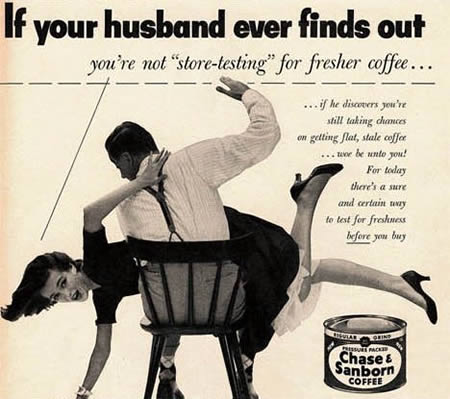
It was feminists, not queers, who first made the argument that marriage promoted inequality.
Several weeks ago, I was sitting in a coffee shop with M, a veteran of New York Radical Women, discussing the gay marriage case pending before the Supreme Court. We agreed that neither of us, as feminists, would have foreseen the emergence of marriage as a post-feminist civil rights issue. Our talk then turned to J, a prominent lesbian feminist who was rumored to have slept with nearly every radical feminist in the East back in the day.
M, a slim and bright-eyed married woman in her seventies, laughed. “J wanted me to leave my husband and run away with her,” she said with a smile that indicated she had been tempted. “I asked: `Are you ready to do equal child-care like he does?’ That ended that.”
My point is that the history of ideas about marriage is intertwined with a feminist intellectual past, but after the Supreme Court’s decision in Obergefell v. Hodges last Friday, it seemed that had been forgotten. The lingering, and often bitter, divisions among LGBT people about whether conventional forms of monogamy and marriage should convey special rights have their roots in this past. Like many radical feminists, anti-marriage queers reject marriage, and the increased state authority over private lives it represents, as oppressive. Conversely, like many liberal feminists, LGBT marriage advocates have viewed the right to wed as a sphere for conveying equality, as well as protection against multiple institutions — the state, schools, families of birth, financial institutions and hospitals — to name a few. Still other LGBT people wade between pro- and anti-marriage positions as most heterosexuals do, choosing marriage to advance their interests and please other people, while disregarding aspects of marriage ideology that they consider to be dated, ethically wrong or inconvenient.
The LGBT marriage wars have existed for at least two decades, but they erupted on queer academic social media after Obergefell. “Love wins!!” many crowed, as their queer Facebook friends rushed to the courthouse and posted marriage updates. For the anti-marriage crowd, “UGH!” was one of the more lighthearted responses: some critics were particularly angered by the tone of Justice Anthony Kennedy’s majority opinion, a document that idealized love, romance, coupledom and the importance of two-parent childrearing. Some in the queer anti-marriage camp reported being “sickened,” “despondent,” and “angry” after reading Kennedy’s words. Others, like Timothy Stewart-Winter, asked the organizations that achieved this milestone celebrate their victory by embracing the larger social justice agenda of an unfinished civil rights movement.

U-Haul tweeted its congratulations by riffing off the old joke about what lesbians do on the second date.
People who are not insiders to queer academia may be shocked by the animus marriage can provoke in LGBT circles. Both pro- and anti-marriage positions were activated in the 1980s, as newly radicalized queers confronted the limits of sexual liberation and identity politics. If AIDS, and the numerous vulnerabilities and inequalities it revealed, played a critical role in galvanizing the campaign on behalf of marriage, it impelled others to ask why citizenship rights were being withheld from those who refused to form “normal” monogamous families.
Michael Warner’s The Trouble with Normal (1999), the cover of which was decorated with little plastic grooms, argued that “homonormativity” not only undermined a queer social justice agenda, but presented a larger ethical problem for progressives by presenting marriage and other forms of normalization as a route to proper citizenship. One of many excellent books to come out of this intellectual moment was Elizabeth Freeman’s The Wedding Complex: Forms of Belonging in Modern American Culture (2002), which pointed to the numerous social longings and investments beyond the couple itself that marriage celebrations have satisfied over time. Yet too often academic critics of marriage have simply not spoken to the more progressive political and imaginative purposes that marriage has supported, particularly as a vehicle for supporting fragile citizenship. One feminist text that received very little attention by queer theorists, for example, was Ann DuCille’s The Coupling Convention: Sex, Text and Tradition in Black Women’s Fiction (1993). Here, duCille argued that marriage has not been a “a transhistorical ideal or a linear literary convention, but a sign of the times that shifts with the times, the place and the people.” (4)
Returning to my conversation with M in the coffee shop: although gay marriage, its proponents and its opponents, have dominated social media and the news, it is the intellectual history of feminism that may offer insights to LGBT people about how to enact this newly-won citizenship right. Calls for marriage rights, marriage reform, marriage resistance and women’s self-determination outside marriage were first articulated by public intellectuals like Angelina and Sarah Grimke, Harriet Jacobs, Ida B. Wells Barnett, Victoria Woodhull, Emma Goldman, and Margaret Sanger. As Leigh Ann Wheeler has pointed out in How Sex Became a Civil Liberty (2014), the ideas and practice of free love among American Civil Liberties Union founders, both women and men, laid the basis for embedding principles of free sexual expression, as well as sexual and gender liberation, into twentieth century civil rights law and social activism.
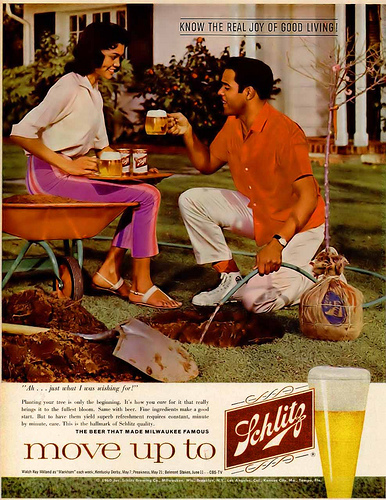
Af Betty Friedan noted, the ideal bourgeois marriage after World War II was full of well-chosen products, with wives as consumers-in-chief.
Second wave feminism targeted marriage for reform and revolution in its earliest days. Betty Friedan, who helped to found the National Organization for Women in 1966, is a classic example of a feminist marriage reformer who viewed sexism and gender roles within marriage, not the institution itself, as the central problem facing women in the United States. Although Friedan’s The Feminine Mystique (1963) critiqued marriage — its commercialism, its claims to romantic and sexual fulfillment that real women could never meet, and its function as an arena for unpaid labor — she saw these characteristics as reformable. In The Second Stage (1981), for example, Friedan argued that the nuclear family was “the new feminist frontier,” scrutinizing shifts of power that would make marriage and motherhood a realm for female fulfillment within heterosexuality. One might also look to early collections such as Toni Cade Bambara’s The Black Woman: An Anthology (1970), where numerous essays argue that it is sexism, not marriage, that prevented women from self-actualization in a loving relationship.
But many feminists, like many queers today, did not see marriage, heterosexuality or monogamy as reformable. For many, like Kate Millett, Charlotte Bunche, and Robin Morgan, leaving a marriage to become a lesbian became the ultimate feminist act. In Cheryl Clarke argued that lesbianism was “an act of resistance” to racism, capitalism and hetero-patriarchy. Many straight women in radical feminism, like Susan Brownmiller, Ti-Grace Atkinson, and Florence Kennedy, never married. Like political scientist and feminist theorist Jo Freeman, these second wave radical feminists saw marriage as an institution defined by unequal sex roles (something that is far from inconceivable in a same-sex marriage.)
For many radical feminists, to live outside of marriage and resist parenting was a fundamental step towards women’s liberation. Freeman’s “BITCH Manifesto,” written in the fall of 1968, declared that BITCH, a mythical organization was composed of “bitches” who “seek their identity strictly through themselves and what they do. They are subjects, not objects. They may have a relationship with a person or organization, but they never marry anyone or anything; man, mansion, or movement.” Like today’s radical queer critics, bitches embraced their role as “marginal beings in this society. They have no proper place and wouldn’t stay in it if they did.” Similarly, in Lesbian Nation: the Feminist Solution (1974), journalist Jill Johnston renounced her marriage and custody of her children as diametrically opposed to female self-actualization.
This sampling of ideas about marriage makes a larger point: that feminism was the starting point for queer critiques of marriage, and we might want to return to feminist theory as well as queer theory if LGBT people imagine that they will inhabit the institution differently and with better outcomes for adults and children. Obergefell offers a significant step forward for civil rights without being the endpoint of any history of women’s rights, gender equality or social justice agenda that is necessarily progressive or without contradiction. So now that the dust has settled, let’s celebrate equal rights without celebrating marriage as establishing gender or sexual equality; and without framing the LGBT pro-marriage coalition as particularly culpable for the promotion of social inequality. At this moment when marriage, and the legal right to parent, is expanding exponentially, we may or may not need more queer theory — but we need feminism more than ever.
This post appeared on July 2 at the S-USIH Blog.
Gay Marriage, in (Out)Historical Context
BY Claire Potter ON June 28, 2015
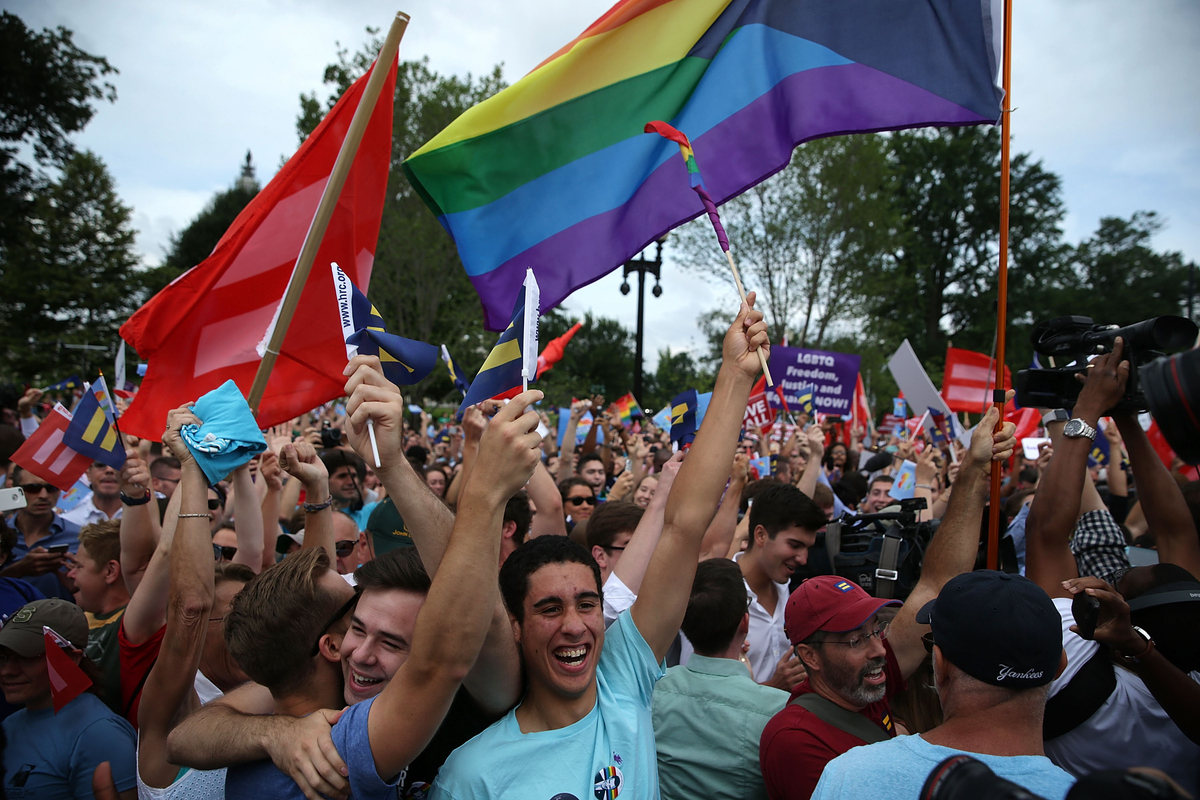 I am not sure that the recent decision in Obergefell v. Hodges is a victory for love, which is often such a fickle emotion. Nor am I sure that it is a victory for respectability, or the children who need far more than respectability to thrive. But I am sure that it is a victory for equal rights, and that it offers an opportunity for our queer political community to move on other social justice issues. Marriage was never the be all and end all of perfect equality, as mainstream media and LGBTQ advocacy organizations would have it. However it was a clear sign of unequal citizenship, and a suppression of our right to have the families we want to have in the ways we want to have them. Or, I will add, to not have them if we so choose, and say why. LGBTQ academics who are vigorously anti-marriage might want to chew on this one as they take to Facebook to predict the End of Days: when it is actually a choice not to marry — to be plurally committed, to be polyamorous, to be domestically organized outside monogamous legal bounds — how much more powerful is that as a statement of your sexual politics?
I might add that it may be an important turn for national politics that LGBT families will fade in their significance as the GOP’s electoral wrecking ball. Those marriage bans had one role, and one role only by the 1990’s: to muster voter turnout through homophobic robocalls and the creation of moral panics. This wasn’t democracy, as gay marriage opponents are framing it, nor did such strategies support freedom of religion. They were cynical campaigns of terror against all LGBT people, and they were a form of voter fraud that sapped the energy of progressive organizers and required extensive disinformation. In response to this propaganda, activists dug in, and so did historians, writing a range of wonderful books that exposed official homophobia for what it is: unequal citizenship and an offense to the Constitution.
Thus, the decision in Obergefell is not only a victory for the lawyers, it is a victory of good history over bad history. Not surprisingly, Harvard historian Nancy Cott’s influential political history of marriage, Public Vows: A History of Marriage and the Nation (2002) is cited repeatedly by the majority: you can read the entire text of Friday’s decision here. Trigger warning, if you find sweeping scholarly generalizations traumatic: you will also see bad history and selective history on both sides of the case, a continual frustration for me even when I read SCOTUS decisions that I like. Generalizations about the histories of family, childhood and marriage offer a perspective on why first year students might come to college making arguments that begin with phrases like “For all of human history” and “Since the dawn of civilization.” If Supreme Court justices do it, why not eighteen year olds?
The histories of gender, sexuality and feminism are far more complicated than those Obergefell has employed, something we need to keep in mind as we celebrate this milestone. Marriage is right for some people and not for others, but the past demonstrates that it is far from a uniquely perfect way for people to organize their lives. All sorts of people, across time and space, have been differently married, happily unmarried, or have privileged different forms of social organization over monogamous marriage. Some people function within systems in which arranged marriage, not romance, dominate the process of creating a family. The unmarried or plurally married have often viewed (many still do) these domestic arrangements as crucial to their personal dignity (a keyword of Obergefell) and to their right to free expression. If it is perhaps technically accurate to say that, over millennia, marriage “has promised nobility and dignity to all persons, regardless of their station in life,” that promise has been but a promise, and it is one that is ever more fragile one in the United States in the face of persistent racism, sexism and social inequality. And I am not even going to begin to ask what Justice Roberts’ clerks were thinking when they let him go out there and rant, in a minority opinion, about the marital preferences of the “Kalahari Bushmen and the Han Chinese, the Carthaginians and the Aztecs.” For this they went to Harvard and Yale? Well educated conservatives can do better than that.
It doesn’t take a Ph.D. in history or cultural studies to point out that legal arguments and court decisions use all kinds of data oddly, sometimes risibly, and the narrative in Obergefell is no exception to the rule. Are LGBT folk likely to do better at marriage than straight people? No, but that isn’t what the Constitution requires of anybody. Has love won the day? Probably not: love is one of the more changeable emotions, a marriage destroyer as well as a marriage creator. Will children in LGBT families feel more secure? Some will, perhaps, but they would be wise to keep a suitcase packed all the same just in case. With a national 50% divorce rate that gays are sure to match eventually (indeed, one purpose that this decision serves is to permit gay divorce in all fifty states), children or adults in LGBT families would be fools to believe that the happy ending promised by marriage boosters’ most starry-eyed proponents is now theirs. Anyone who studies the history of childhood, or who has ever seen a joint custody agreement play out in real time, knows that co-parenting after a divorce, even when custody is not contested, is an economic and emotional challenge .
But the Constitution has won the day, and I’ll take it! For decades, achieving gay rights has been a process of accepting half-measures, concessions and small victories while I prepare to be kicked in the face every time a SCOTUS decision or a hateful anti-marriage ballot measure is pending. Structural inequalities need to be rectified wherever we identify them, and full citizenship rights are not to be sneezed at. Critics who are angry at the amount of queer funding that Obergefell consumed have a point. However, they may also wish to reflect on the fact that LBGT people didn’t start this fight: the Catholic Church, Protestant mega-churches, the Republican Party and cynical political operatives bankrolled by the radical right did (see, for example, Rimmerman and Wilcox, The Politics of Same-Sex Marriage, 2008). To presume that crucial and underdressed issues — homelessness, poverty, health care, and the plight of queer youth — could be rectified as full citizenship rights for LGBTQ people as a whole were being retracted strikes me as fundamentally misguided, impractical and wrong.
Of course, we will also never know how a different LGBTQ national agenda focused on racism or economic inequality might have played out, because that isn’t the direction history went. Take a look at Timothy Stewart-Winter‘s wonderful op-ed in The New York Times, urging us to attend to social agendas that have stalled and been rolled back, even as the bans on sexual inequality have crumbled. We are also looking forward to the November pub date of Katherine Franke‘s Wedlocked: The Perils of Marriage Equality (NYU: 2015), which you can pre-order here. While you are waiting for Franke’s book to appear in your mailbox: for a bracing reminder of the feminist intellectual roots of queer studies, one that sketches a history of why marriage is particularly bad for women within heteropatriarchy, go read Gayle Rubin‘s marvelous debut article “The Traffic in Women: Notes on the Political Economy of Sex” (1975).
Getting the government out of the business of official homophobia is another important outcome of Obergefell: a new half-hour documentary, Uniquely Nasty: the U.S. Government’s War on Gays tells part of this story. By journalist Michael Issikoff and produced by Yahoo Viewfinder, it is available free on line. It will be particularly interesting if you are a political historian: the film begins with George W. Bush committing to gays in his party and then throwing them under the bus by using bans on same-sex marriage as a cynical get out the vote strategy. Couple this with David Johnson’s The Lavender Scare: The Cold War Persecution of Gays and Lesbians in the Federal Government (2004).
Finally, the Interactive Timeline we prepared on Marriage and Marriage Resisters in LGBTQ history is immediately relevant to debates between those who uncritically applaud the opening of marriage to all, those who have always opposed gay marriage, and everyone in between. This exhibit also includes the amicus briefs filed by the American Historical Association and the Organization of American Historians on behalf of marriage equality.
Refreshing Abominations: An Open Letter to Anthony Kennedy
BY Marc Stein ON May 4, 2015
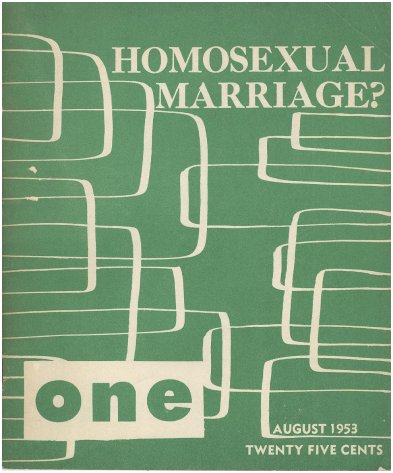 Dear Tony,
As I listened to the Supreme Court’s oral arguments in the same-sex marriage case a few days ago, I began to worry about the questions that you and the other justices asked and the answers you received about the history of marriage over the last millennium. Most of the questions and answers began with the assumption that marriage, always and everywhere over the past 1000 years, has only joined together men and women. In the discussions that ensued, there were many good points raised about the ways in which marriage has changed significantly over the course of history, touching especially on the legalization of interracial marriage, the prohibition of polygamous unions, and the transformation of gender hierarchies. It’s good that these issues were discussed and highlighted, but I’m concerned that there were other relevant questions about the history of marriage that were not asked and answered during the oral arguments. I worry especially about some of the false assertions that were made about the essential and definitional features of marriage across centuries and centuries of human history. So I’m offering you a few questions that could and should have been asked and hoping that experts on the history of marriage might help the Supreme Court find useful answers.
(1) Insofar as marriage has meaning as a legal institution, a religious practice, a community ritual, and a type of personal relationship, when, where, and why have same-sex couples married over the last millennium? When same-sex marriage has not been legally recognized, has it existed as a religious practice, a community ritual, or a type of personal relationship? To take several examples, what do we know about women who formed “Boston marriages” in the nineteenth century? Is there evidence that same-sex couples engaged in wedding rituals and marriage ceremonies in the early and middle decades of the twentieth century? Does any of this matter in your consideration of the definition of marriage?
(2) When, where, and why did marriage become a legally-recognized institution? After this occurred, how did the state address marriages that were not legally recognized? When and where did the state recognize common-law marriages? How did European countries and American colonies with established religions (typically Catholic or Protestant) address marriages that were performed outside of the established church? In colonial and other contexts, how did the state address marriages that formed in the absence of recognized legal or religious authorities? How did U.S. and state laws address Native American marriages and marriages that had occurred on land that the United States conquered and claimed? How did U.S. and state laws address slave marriages before the Civil War? After slavery was abolished (except as punishment for crime), how did the United States and the states address pre-Civil War slave marriages? Why do we refer to frontier, Native American, and slave marriages as “marriages” if they were not legally recognized under U.S. and state law? Do we do so because these marriages were meaningful to the marital partners and to the communities and cultures in which they took place?
(3) When, where, and why did U.S. or state officials engage in examinations and investigations to determine that two individuals who wished to marry were “male” and “female”? How were such examinations and investigations conducted? In marriage practices, did biological males ever present themselves as women and did biological females ever present themselves as men? What happened when this occurred? Do we know how frequently this occurred? Did the couples involved think of themselves as “man” and “woman”? Did intersex people ever marry? How did the state handle their marriages?
(4) When did states first pass laws that explicitly restricted marriage to one man and one woman? Why were these laws passed? Before these laws were passed, did the states decline to recognize same-sex marriages because of explicit legal restrictions on marriage, because of common-law definitions, or because of longstanding social and cultural assumptions about marriage?
(5) What religions have recognized same-sex unions, partnerships, and marriages? When, where, and why did they do so?
(6) What do we know about the history of same-sex marriage as a community ritual and a personal relationship? Have same-sex couples ever referred to themselves as married? Have they ever been referred to by others as married? Have U.S. subcultures ever recognized same-sex marriages? Which subcultures? Have same-sex marriages ever been recognized in meaningful ways by people inside and outside of the cultures and communities in which these marriages occurred? Why or why not?
(7) If we use the 14th Amendment’s equal protection clause to invalidate state restrictions on same-sex marriage, what do we do about equal protection claims by single people who suffer from discrimination based on marital status?
I hope you find good answers to these questions, Tony. By the way, please thank Antonin for inspiring what may be generations of political groups, sports teams, drag performers, and specialty cocktails that will be named Refreshing Abominations.
Marc Stein is the Jamie and Phyllis Pasker Professor of History at San Francisco State University and the author of several books on the history of sexuality, constitutional law, and social movements, including Sexual Injustice: Supreme Court Decisions from Griswold to Roe (2010) and Rethinking the Gay and Lesbian Movement (2012). In 2014, his essay “Sexual Rights and Wrongs: Teaching the U.S. Supreme Court’s Greatest Gay and Lesbian Hits” was published in Understanding and Teaching U.S. Gay, Lesbian, Bisexual, and Transgender History, edited by Leila Rupp and Susan Freeman.
New and Noteworthy
BY Chris Howard-Woods ON April 21, 2015
-
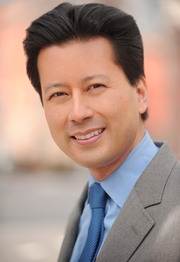
Kenji Yoshino
NYU legal scholar Kenji Yoshino published this week his newest book Speak Now on the likely arguments of the upcoming Supreme Court marriage equality case.
- “Kate Bornstein is a Queer and Pleasant danger”: Performance artist Kate Bornstein and director Sam Feder screen and do a Q&A for the new documentary on the life of this artist-theorist-activist. Thursday, April 22nd at 7pm, Segal Theater, CUNY Graduate Center. RSVP Here.
- Also at the CUNY Graduate Center this week is a symposium, “Risking Vulnerability/Risquer la vulnérabilité.” Learn more about this event here.
- What we’re reading this week: If you like Patti Smith’s Just Kids (HarperCollins, 2010) Brad Gooch‘s Smash Cut: A Memoir of Howard & Art & the ’70s & the ’80’s (HarperCollins, 2015) is an homage to Brookner’s first great love, filmmaker Howard Brookner, the New York art world, and the Big Party.
The Coming Gay Conservative Revolution
BY Eric Gonzaba ON March 23, 2015

Photo by Mario Piperni
I joke with some of my friends that soon, especially with what seems like the inevitable embrace nationwide of same-sex marriage, gay men will be flocking to the Republican Party, eager to distance themselves from gay activism or stereotypes as lefties, eager to act like their gay identity doesn’t tie themselves to a certain political ideology. I say joke, but I do think there’s something to be said that the end of the gay marriage debate might bring about an end to bringing national attention to LGBT issues, and with that, reassurance within our own queer communities that we have attained equality and are now living in a just society.
Gay marriage is a partisan issue and with that, LGBT people have largely united as a voting bloc against the conservative American political party. Self-identified LGBT Americans overwhelmingly voted for the reelection of Barack Obama (some 77% in support). That’s about 7% more than gay support to McCain, who, unlike Romney, did NOT support a federal amendment banning gay marriage. So why do I suspect there’ll be a conservative resurgence in our communities (but, most especially, among gay men)? Am I just some crazy skeptic, like Republicans who think global warming isn’t real because it snowed this winter?
No, I say this because advocating for marriage is, lest I sound like a “Mean Girl,” so0o0o0o0o conservative. Ask them yourselves—conservative gay columnists like Andrew Sullivan have argued as early as the 1980s that the Right should embrace gay marriage. They say, despite our communities’ transgressive roots, “a need to rebel has quietly ceded to a desire to belong. To be gay and to be bourgeois no longer seems such an absurd proposition.”
That, in fact, is part of the problem. Is our community really challenging “common assumptions and core institutions,” as John D’Emilio put it in a recent OutHistory post? This conflation of marriage equality as the main indication of LGBT progress has remade gay politics from being about class, gender, racial, and sexual liberation to one about money and societal comfort.
In Terrorist Assemblages: Homonationalism in Queer Times (Duke, 2007), Jasbir Puar discusses how the American gay community has sought integration and political rights through consumerism, exuding patriotism by doing what Americans do best—spending! Take, for instance, how the gay community is targeted by the tourism industry. After all, who better to target for travel to than the gay male, who, as the stereotypes tell us, is rich, educated, and without pesky children. In other words, they are prime consumers. As Alexandra Chasin suggests, gays and lesbians are bombarded by advertising that suggests their spending would eventually bring about their “full inclusion in the national community of Americans.”
This is nothing new for a social movement. In the past century, several disenfranchised groups, especially African Americans, sought progress not just by appealing to morality or political rights (the right to vote, hold office, etc.), but through consumption. They found a route to political success by appealing to economic freedom, the right to sit at a lunch counter or to buy a new washing machine at a segregated store. However, there is something extremely insidious about our embrace of a gay politics centered on spending and the conservative message that “we are just like everyone else.” If we are to believe the tourism industry, gay politics is all about being white and rich, which in turn means there is little demand to address the needs of racial minorities or those with lower socioeconomic status. It also produces an excuse for normative society to exclude sexual orientation as a suspect class in need of protection.
I’m not saying that you LGBT Americans can’t be conservatives. Everyone is allowed to believe what he or she wants (Senator Inhofe and his snowball on the Senate floor trying to debunk immense scientific consensus on climate change, is a great example that Americans really do have that freedom.) I also think you’re allowed to “care more about the economy and our nation’s security more than [you] do the government recognizing [your] relationship with someone,” as one young gay conservative told the Blaze last year.
While this divide is certainly problematic (I feel like Democrats probably care about national security too), LGBT communities certainly can turn Right if it aligns with their interests, though we should probably ask ourselves why so many don’t. Look at those enlightening (if not tangential) roundtables with black conservatives on Sean Hannity’s Fox show. While it’s great to give a forum to people with different viewpoints, one has to wonder why 90% of African Americans vote Democratic. It’s certainly not, as conservatives say, just that they’re pawns of the Democratic party; after all, Democrats have lost 3 of the last 4 midterm elections, certainly not indicative of a superb mind-control operation.
So yes: perhaps the emergence of a society okay with gay marriage will mean an end to an LGBT coalition. However, as a wider community, we ought to consider whether queer factions should want to leave such a political union. Even if we don’t want to be the radicals we once were (and we certainly should rethink that), we owe it to our progressive allies in any political party (Democrat, Republican, Green, Libertarian, or gasp!—Communist) to continue our aim at a more egalitarian society.
New and Announcements
BY Claire Potter ON January 27, 2015
- Faramerz Dabhoiwala on the secret history of same sex marriage (The Guardian, January 23 2015).
- Tav Nyong’o reviews the new Fox drama Empire at Bully Bloggers, and asks: “Can upwardly-mobile black queer sons and daughters like Jamal escape this `good enough’ life?”
- CFP: Radical History Review, “Reconsidering Gender, Violence and the State.” Abstracts due February 1, 2015. As emerging scholarship in feminist and queer history makes clear, archives contain surprising histories about gender, sexuality and violence, stories that challenge axiomatic, gendered oppositions of power and vulnerability. This issue of Radical History Review hopes to explore these histories, and reassess conflicting narratives of victimization, subjection, retaliation and self-defense in the context of forms of state authority.Events and developments over the last two centuries—from the expansion of the provocation defense in the nineteenth century, to the collection of rape testimonies in the early twentieth-century, from the torture and abuse at Abu Ghraib, to the recent mass kidnapping of girls in Chibok, Nigeria—convey contradictory messages about race, gender, violence and the role of the state as enforcer, perpetrator or protector. Recent calls for critical re-examination of timeworn notions of male violence and female victimhood suggest the need to interrogate longstanding assumptions about the relationships among gender, violence and the powers of the State.This special issue of Radical History Review invites critical reflection on gendered violence as a historical, intersectional topic of lasting significance. How have conceptions of masculinity and femininity over time informed the persistence of and punishments for gendered violence? What do the archives reveal about the larger structural factors that perpetuate gendered violence? How have feminist and queer organizing efforts to protect and/or avenge victims, further complicated the legal, penal, and legislative efforts to address gendered violence? For the full call, click here.
Now What? Social Justice After Marriage Equality
BY Sarah Neddo ON November 30, 2014
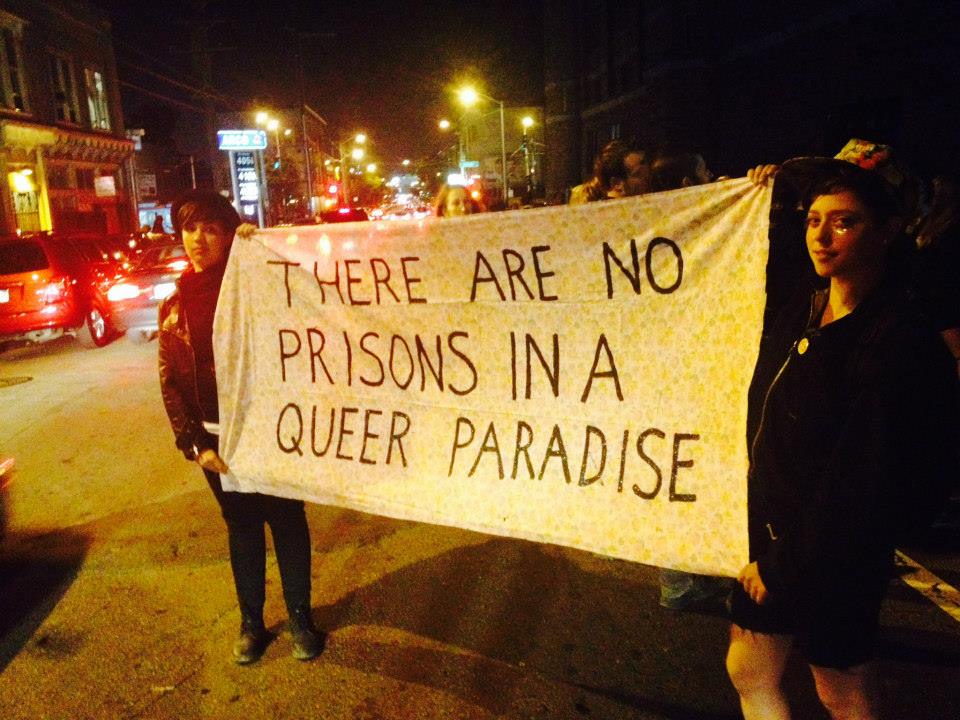 In June SCOTUS ruled not to rule on the issue of same-sex marriage. I know because I watched from afar as my friends and family posted engagement photos, red equal signs, and personal status updates about what this decision meant for their lives in Wisconsin, my home state, where same-sex couples can now get married.
Following the Supreme Court’s ruling, I read that the Williams Institute estimated the economic boost from the marriages of same-sex couples in Wisconsin to be around $34.3 million. A number that can dismantle any lingering civil and legal debates over if same-sex marriage is bad for Wisconsin.
But how much of that money will I get? How much of that money will any of my recent queer undergraduate and rural high school friends get? What does this number mean for my trans, genderqueer, and gender-non-conforming friends hosting crowdsourcing campaigns to raise money for top surgeries and hormone therapy, so they can lead more authentic lives?
Don’t get me wrong. The community I found in Wisconsin is not tragic. The community I found taught me resilience and gave me courage to lead a more authentic life through their own bold efforts to carve out space for themselves, unfunded and before same-sex marriage was legal. #somanyfeelings.
But we are still struggling. Struggling to find jobs that will embrace or at least tolerate our gender expression. Struggling to fight for reallocation of the $135 million dollars going to a new jail in Dane County. Struggling to change Wisconsin’s image as the worst state for black kids in America.
Now, the philanthropy community is wondering what’s next? Shutdown the movement? Put money towards those issues which were downplayed in favor of a Marriage Equality effort? Focus on multiple issues that come up in the “lived experiences” of queer people? The article does not give any clear answers, except that there will probably be no single issue to dominate funding.
Seeing pictures from recent queer weddings and watching people sigh relief at a sign of how they are now being recognized in their home state makes me happy, but doesn’t make me forgot all the work left to be done by a movement that prioritized a single issue leaving many out.
Thinking about Marriage
BY John D'Emilio ON November 19, 2014
 I don’t expect the Chicago Tribune’s Business Section to get me ruminating about LGBT history and politics, but that’s what happened yesterday morning. The section’s front-page had an article, “Singles are the new sweet spot,” that described how consumer-related businesses are shaping their products and their practices to suit the needs of singles. Why might this be? Well, as the writer explained, singles may well be the largest, and fastest growing, market in the U.S. This year, for the first time, over half of U.S. adults are unmarried. And 20% of adults over 25 have never married, more than double the percentage in 1960. The unstated implication of this: marriage figures less significantly in the lives of Americans than ever before. This trend has been developing and growing for over half a century, and there’s every reason to believe this shift will continue.
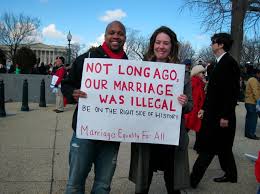
I couldn’t help reflecting on the irony of this in relation to the campaign to legalize marriage for same-sex couples. That campaign is on a roll, accelerating faster than probably even its most active participants expected. And, there is no question that the fight for access to marriage has had a profound impact on masses of non-LGBT Americans. More than any other LGBT issue – military exclusion; hate-inspired violence; job discrimination; AIDS – the campaign for marriage allows heterosexuals to identify with us. Marriage may be declining as lived experience, but culturally, it is recognizable to all. The declarations of love that a wedding calls forth, the happiness that a wedding generates for all who are there: well, to put it simply, “queers” can’t be THAT different from “us” if they yearn to marry the one they love.
Marriage, of course, is more than just a celebration of love. It confers benefits [it also can confer misery, and lots of difficult problems, when it ends in divorce, but that’s another issue]. While one of the trends in the U.S. over the last 50 years is that the marriages that are statistically most likely to happen and to last are those positively correlated with income and education [more education and more income = more likely to get and stay married], the fact is that for individual couples the ability to marry can make a big difference in quality of life. For older couples, it means access to a spouse’s social security benefits. For many same-sex couples who are parents, it can make dealing with schools and a host of other institutions much easier.
When I think of the long history of LGBT activism in the U.S, stretching back to the post-World War II years, I’m struck by how the periods of most creativity, the periods that involved the biggest leaps forward, were those in which activists most clearly challenged common assumptions and core institutions. The U.S. LGBT movement was launched by a group of gay men who had ties to the Communist Party and who theorized that “homophiles” were a distinct minority with a special role to play in society, based on their difference. The Stonewall-era gay liberation and lesbian-feminist movement saw the oppression of queers as thoroughly linked to gender, racial, and class inequalities; it believed liberation would come only if one thoroughly re-imagined and reconstructed the nuclear family; and it sought to make common cause with other radical movements. The radicalism of ACT-UP that AIDS generated by the late 1980s wanted to remake the health-care system in the United States and provoked a community debate about sexuality and pleasure as key elements of human life. By contrast, the movement for marriage equality aligns itself with an institution that is not only in decline. It is also an institution that acts as gate-keeper for who deserves key benefits basic to a human’s survival – parenting, an income in old age, health care and insurance, and many more. Significant and exciting as this campaign has often been, it seems a sad misdirection of a social change movement’s limited resources.