


Jimmy Baldwin Made Me Gay
BY John D'Emilio ON December 17, 2014
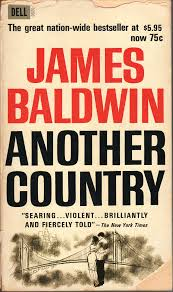
I was a sophomore in high school, struggling with . . . well, I didn’t quite know what I was struggling with. Meanwhile, in English class that year [winter 1964]we were each expected to choose a contemporary novel and write a report on it. I had pretty much only read old “great works” at that point, so I asked Mr. Ridley, the Jesuit scholastic who was teaching the class, for some ideas. He suggested a novel that had just come out in paperback, Another Country, by James Baldwin. I hadn’t heard of either the novel or Baldwin, but I took his advice.
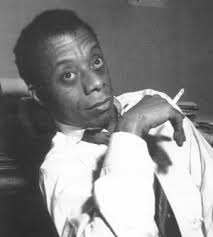
Did Mr. Ridley see something in me that I still didn’t grasp? I will never know the answer to that. But, from the first page, I couldn’t put the book down. Its New York setting offered a familiarity and immediacy that pulled me in. There was also more sex and love-making than I had ever encountered in a book, and it came in more combinations and permutations than I had thought possible. But, most of all, it gave me a name for the feelings that I was struggling with. It gave me a geography of Manhattan to explore so that, maybe, somehow, my yearnings could find an outlet. True, a key character committed suicide and another fled to France. Despair, isolation, and desperation seemed to trail many of the characters. The novel left me terrified. But, by the end, there was also love and hope and the prospect of happiness, even if there was no way that I could yet imagine those things attaching to me and my desires.
I tend to think of activism, organizations, and movements as the key levers for achieving social change and reaching toward social justice. But, for this particular teenager, at that time and place, a cultural product profoundly affected me. Baldwin’s writing made a huge difference in my life.
In writing LGBT history, it is easier often to go for the collective, for the social, for the political. But how do we chart the evolution of consciousness and the unfolding and shaping of our identities, our understandings of self? What role have cultural products played and how has that role changed over time? And, in the contemporary U.S., do particular cultural products even matter in the crystallization of personal identity, when there is so much visibility – at least in comparison to fifty years ago – in television, on film, in popular music, in literature, and on the web?
I would love to have historians – and our websites – collect the testimonies of individuals across generations about whether there was a piece of literature or a film or other media that made a light bulb go off in their heads so that they said, “yes, that’s me.” And what were those cultural products?
Comments