


Don’t Get Cozy, Queer Millennials
BY Eric Gonzaba ON November 20, 2015
 I’m one of those few people who still reads Time magazine. I know . . . I’m ancient. What’s worse? I still read the paper version of the weekly newsmagazine, and I receive it from a member of the United States Postal Service. Look, I’m working on joining the rest of my digitally savvy generation. I’m proud to announce, for instance, that I recently became a member of the cool kids club and used my iPhone as a boarding pass for a cross-country flight. When my face lit up after the scanner successfully read the phone code, the TSA agent just glared at me all confused. Baby steps. . .
As you probably know, cover stories for the American Time usually prove to be nothing more than attention grabbing nonsense. I had little hope for a recent cover story entitled “Help! My Parents Are Millennials,” accompanied by an image of a baby riding in a fancy stroller and accosted by numerous smartphones pointed at his adorable face. I reckoned I was in for another essay of millennial bashing, a now popular activity among hip baby boomer intellectuals. I get the thrust of the concern for my generation; we’re sometimes entitled, self centered, lazy activists, ready to add a filter to our Facebook profile pictures to support marriage equality or show solidarity with the victims of the Paris atrocities, but not that into getting off our couches to do much more than that. It’s certainly easy to broad stroke an entire generation but I’m starting to find it a little lackluster. Why does everything have to result in some kind of generational fight?
Much to my surprise, Katy Steinmetz’s article proved more informative than condescending. Yes, she laid out the quirkiness of the smartphone society, our odd name selections for children, for example, and our exploding “vast archives of selfies.” Still, perhaps it’s the cultural historian in me, but I appreciated the fact that she let millennial parents actually speak for themselves, and the results proved illuminating. Some 50% of millennial parents consciously purchased gender-neutral toys for their children, compared to only 34% of Generation X or baby boomer parents. Millennials, not that surprisingly, overwhelming support same-sex marriage. They tend to care more about issues of sex, sexuality, and gender, and largely want to promote a more equal society for themselves and their kids. Sure, some of the carnivores among us might be alarmed that the occasional millennial parent trains his or her kid to be (gasp!) a vegan from an early age, but no one said the current generation has to be anything like the last one. Let’s remember that, as historians like Elaine Tyler May have argued, even the baby boomer generation fundamentally upended their approaches to issues of sex and sexuality and challenged notions of “normality.”
We ought to be critical of millennial culture but not because of the typical skepticism aimed at the selfie generation. For our queer cultures and communities, the millennial challenge is to not get cozy in the world that’s forming around us. We should combat the comfort that comes with living in a seemingly more inclusive society, because that inclusivity is a mirage to many in our diverse queer communities. That comfort can breed indifference, and with that we forget the immense struggles that queer people continue to face. Look no further than places like Houston, where a group of misinformed Americans convinced an electorate that trans people are mentally disturbed perverts lurking in public bathrooms ready to prey on children. Sure, there was some outrage, but too many of us let the day pass without anymore than a sigh. Imagine the prolonged outcry if, this past June, Justice Kennedy had written that marriage was not a fundamental right.
And then, there is racism. It’s our duty to stop treating non-white gay men in our communities as some sort of tangential concern. People of color and transgender communities are not allies in our collective struggle for acceptance. They are, in fact, the struggle. They face widespread stigmatization, violence, and homelessness, and yet we continue to convince ourselves that we have championed a more tolerant America.
As millennials, we ought to note the lessons of generations before us not to settle within the comfort of apathy and instead make our legacy one of an unrelenting push for an egalitarian world. We’ve already begun building a culture where children aren’t confined to pre-determined dreams based on the baby blue and girly pink toy lines, and it’s heartening that those children will be more able to accept cultural differences because of how the law treats same-sex couples and military service people. However, if that’s our millennial legacy, I’m unimpressed. You’re reading this rambling post on a device that has more technological power and with that more opportunities for learning and engagement than anything known in human history. Yet, we’re living in a world where members of our queer communities face bigotry on a deadly scale.
Let’s end the sighing. Time to get uncomfortable.
History and Social Change
BY John D'Emilio ON January 14, 2015
 History has always been, for me, a story of change. Empires and kingdoms, political parties and corporations, come and go. Even when one can point to continuities, such as the persistence of structural inequality like racism and sexism, history allows us to analyze and come to grips with how the forms in which oppression expresses itself have shifted over time.
In terms of U.S. LGBT history, the last sixty years have been a story of tremendous change, and much of it deserves to be called progress. The end of sodomy laws, the passage by state and local governments of laws protecting people from discrimination based on sexual orientation or gender identity, the proliferation of organizations that allow LGBT people to come together openly, the visibility in popular culture: all of this is for the good. Who could have imagined sixty years ago, for instance, that a Golden Globes award ceremony would one day see a television series and an actor honored for a series about a transgender parent? Or that one of the most popular figures on network television would be a lesbian, who also hosted the Oscars? In many, many ways, the changes of the last two generations have improved the lives of many, many LGBT people.
But, ironically, there is at least one group of people for whom these changes may have made life worse: youth. The visibility, the organizations, the public discussion have all made it much easier for younger people to name the feelings and the sense of self that make them feel different. They have so many models for coming out. But, sadly, young people do not have the independence and autonomy that can let adults navigate the still complex matter of coming out publicly. Embracing their identity can put them squarely in the jaws of oppressive reactions that come at them from a variety of directions, but especially from peers in school. Despite the proliferation of Gay/Straight Alliances in thousands of schools, LGBT students are vulnerable to insult, to bullying, and to physical assault. The most recent school climate survey undertaken by GLSEN revealed horrifyingly high rates of homophobic and transphobic experiences among youth.
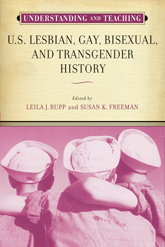
What are some of the ways to address this? I was brought face-to-face with this question at, believe it or not, this year’s annual convention of the American Historical Association. I participated in a session titled “Teaching Queer History,” along with Emily Hobson, Felicia Perez, Daniel Hurewitz, and Don Romesburg. The session was sparked by the recent publication of a book, Understanding and Teaching U.S. Lesbian, Gay, Bisexual, and Transgender History, edited by Leila Rupp and Susan Freeman.
The point of all of our presentations was that incorporating LGBT history into the school curriculum can make a significant difference. It opens the topic up for discussion. It “normalizes” the existence of LGBT people today by making same-sex love and gender-nonconformity important parts of the past. Less about finding “role models” in the past than about widening more generally the intellectual and cultural horizons of students, LGBT history can be a force for positive, progressive change, and especially in regard to a particularly vulnerable part of the LGBT population.
The book is a tremendous resource for teachers, both high school and college, looking for ways to include queer material into U.S. history courses. There are essays ranging from early America to the era of AIDS, essays exploring the resources available on the web and in the media, and essays in which teachers discuss their experience in the classroom. The book is especially timely because of the passage in California of the FAIR Act [Fair, Accurate, Inclusive, and Responsible Education Act] that mandates the inclusion of LGBT material in the curriculum. California’s leadership may encourage other states to follow suit, even as Understanding and Teaching U.S. Lesbian, Gay, Bisexual and Transgender History will help teachers across the country make the case that it can be done and then actually doing it.
History as a force for social change. I love the idea!
News and Announcements
BY Claire Potter ON January 11, 2015
Slut: A Play: February 7 & 8, at The New School, New York City. Written by Katie Cappiello, directed by Katie Cappiello & Meg McInerney, and featuring The Arts Effect All-Girl Theater Company
StopSlut is a youth-led movement to end slut shaming and transform rape culture. This February, a part of StopSlut, The Arts Effect, the Feminist Press, and The New School present TWO SPECIAL PERFORMANCES OF SLUT: A Play at Tishman Auditorium at The New School.
This critically-acclaimed play follows the journey of 16-year-old Joanna Grace Del Marco, who is raped by three of her friends during a night out in NYC. Through Joey’s story and those of girls’ in her community, audiences witness the damaging impact of slut culture and the importance of being heard. This play was developed by The Arts Effect in collaboration with high school students during two years of weekly creative sessions.
Each performance will be followed by a talkback with the cast, directors, and special guests.
Jimmy Baldwin Made Me Gay
BY John D'Emilio ON December 17, 2014
I was a sophomore in high school, struggling with . . . well, I didn’t quite know what I was struggling with. Meanwhile, in English class that year [winter 1964]we were each expected to choose a contemporary novel and write a report on it. I had pretty much only read old “great works” at that point, so I asked Mr. Ridley, the Jesuit scholastic who was teaching the class, for some ideas. He suggested a novel that had just come out in paperback, Another Country, by James Baldwin. I hadn’t heard of either the novel or Baldwin, but I took his advice.
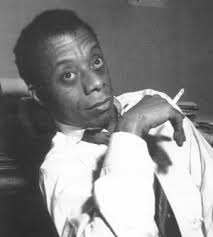
Did Mr. Ridley see something in me that I still didn’t grasp? I will never know the answer to that. But, from the first page, I couldn’t put the book down. Its New York setting offered a familiarity and immediacy that pulled me in. There was also more sex and love-making than I had ever encountered in a book, and it came in more combinations and permutations than I had thought possible. But, most of all, it gave me a name for the feelings that I was struggling with. It gave me a geography of Manhattan to explore so that, maybe, somehow, my yearnings could find an outlet. True, a key character committed suicide and another fled to France. Despair, isolation, and desperation seemed to trail many of the characters. The novel left me terrified. But, by the end, there was also love and hope and the prospect of happiness, even if there was no way that I could yet imagine those things attaching to me and my desires.
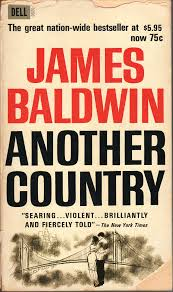
I tend to think of activism, organizations, and movements as the key levers for achieving social change and reaching toward social justice. But, for this particular teenager, at that time and place, a cultural product profoundly affected me. Baldwin’s writing made a huge difference in my life.
In writing LGBT history, it is easier often to go for the collective, for the social, for the political. But how do we chart the evolution of consciousness and the unfolding and shaping of our identities, our understandings of self? What role have cultural products played and how has that role changed over time? And, in the contemporary U.S., do particular cultural products even matter in the crystallization of personal identity, when there is so much visibility – at least in comparison to fifty years ago – in television, on film, in popular music, in literature, and on the web?
I would love to have historians – and our websites – collect the testimonies of individuals across generations about whether there was a piece of literature or a film or other media that made a light bulb go off in their heads so that they said, “yes, that’s me.” And what were those cultural products?